AirPods Pro 3 & Pixel Buds Pro 2 share many similarities, but there are also important differences, such as quality, performance, features, design, and connectivity. If you want the best one between them, I Would recommend the AirPods Pro 3 rather than the Pixel Buds Pro 2.
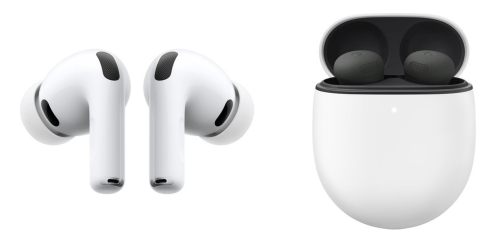
Why Do I Recommend The AirPods Pro 3?
- The AirPods Pro 3 features the Apple H2 chip for faster real-time audio processing and lower latency during calls and media playback, while the Pixel Buds Pro 2 uses the Google Tensor A1 chip.
- AirPods Pro 3 includes Personalized Spatial Audio with dynamic head tracking for a more accurate surround sound experience that adapts to head movement during movies and music, whereas the Pixel Buds Pro 2 supports spatial audio without personalized calibration.
- It comes with Adaptive Transparency for automatically reducing sudden loud noises like sirens or construction sounds while maintaining environmental awareness, while the Pixel Buds Pro 2 uses standard transparency mode.
- The AirPods Pro 3 supports Ultra Wideband precision finding for locating the case with directional guidance and distance tracking through the Find My network, whereas the Pixel Buds Pro 2 uses location-based tracking without UWB.
- AirPods Pro 3 features a MagSafe-compatible charging case for secure magnetic alignment and compatibility with Apple Watch chargers for more flexible charging options, while the Pixel Buds Pro 2 supports standard Qi wireless charging only.
- It includes a built-in case speaker for emitting sound alerts during tracking or low battery notifications for easier physical location, while the Pixel Buds Pro 2 case does not include a speaker.
- The AirPods Pro 3 has swipe-based volume controls on the stem for adjusting sound levels directly without using a phone, whereas the Pixel Buds Pro 2 relies on tap gestures or device controls.
- AirPods Pro 3 supports seamless automatic switching across Apple devices linked to the same iCloud account for uninterrupted transitions between iPhone, iPad, and Mac, while the Pixel Buds Pro 2 supports standard Bluetooth multipoint for two devices.
Maybe the Pixel Buds Pro 2 can make you comfortable because it’s a little bit cheaper than the AirPods Pro 3. But you have to compromise all the above-mentioned features. Now the Decision is Yours. I hope it was helpful to choose the right one.
Side-by-Side Comparison
| Feature | AirPods Pro 3 | Pixel Buds Pro 2 |
| Chipset | Apple H2 | Google Tensor A1 |
| Active Noise Reduction | ~90% noise reduction | ~80% noise reduction |
| Earbud Battery (ANC ON) | 8h 42m | 7h 55m |
| Charging Port | USB-C + MagSafe + Apple Watch | USB-C |
| Wireless Charging | Qi + MagSafe | Qi |
| Water Resistance | IP57 | IP54 |
| Microphones | 3 microphones | 2 microphones |
| Driver Size | Custom high-excursion driver | 11 mm dynamic driver |
| Multipoint Connectivity | Automatic Apple switching | Multipoint |
| Ultra Wideband | U2 chip | Not supported |
| Find Tracking | Precision Finding + speaker | Location-based tracking |
| Spatial Audio | Personalized + head tracking | Spatial audio + head tracking |
| EQ Type | Adaptive EQ | 5-band manual EQ |
| Ear Tip Design | Silicone + foam tips | Silicone tips + stabilizer fin |
| Ear Tip Sizes | 5 sizes | 3 sizes |
| Control Type | Pinch + swipe gestures | Tap + swipe gestures |
| Voice Assistant | Siri | Google Assistant + Gemini |
| Live Translation | Gesture-triggered | App-based real-time translation |
| Heart Rate Sensor | Integrated | Not available |
| Case Speaker | Built-in | Not available |
| Ecosystem Requirement | iOS full features | Android full features |
| Price | Check AirPods Pro 3 Price | Check Pixel Buds Pro 2 Price |
What Common Both Can Do?
- Active Noise Cancellation: Both earbuds include active noise cancellation technology that reduces external sound using built-in microphones and processing. This allows users to focus on audio playback in environments such as public transport or crowded spaces.
- Transparency Mode: Each model features a transparency mode that lets outside sound pass through while wearing the earbuds. This is useful for staying aware of surroundings without removing the earbuds during conversations or while walking.
- Spatial Audio: Both support spatial audio, creating a sense of depth and direction in sound playback. This enhances immersion when watching movies or listening to compatible content.
- In-Ear Design: Both earbuds use an in-ear form factor that sits inside the ear canal. This design improves passive noise isolation and helps stabilize the earbuds during movement.
- Silicone Ear Tips: Each product uses silicone ear tips to create a seal inside the ear. This helps improve both comfort and audio performance by reducing sound leakage.
- Multiple Ear Tip Sizes: Both models include multiple ear tip sizes to accommodate different ear shapes. This ensures a better fit, which directly impacts comfort and sound isolation.
- Touch Controls: Both earbuds support touch-based controls for playback and calls. This allows users to interact with the device without needing to access their phone.
- Voice Assistant Support: Each device integrates with a voice assistant for hands-free control. This enables tasks such as setting reminders, controlling music, or checking notifications.
- Wireless Charging: Both cases support Qi wireless charging for cable-free power replenishment. This adds convenience when using compatible charging pads.
- USB-C Charging: Both earbuds use a USB-C port for wired charging. This provides faster and more universal compatibility compared to older charging standards.
- Bluetooth Connectivity: Each model connects via Bluetooth for wireless audio streaming. This ensures compatibility with a wide range of smartphones, tablets, and computers.
- Automatic Pairing: Both earbuds support automatic pairing with previously connected devices. This simplifies the connection process and reduces setup time.
- In-Ear Detection: Each model detects when the earbuds are placed in or removed from the ears. This enables automatic play and pause functionality for seamless listening.
- Dual Microphones: Both include multiple microphones in each earbud for capturing voice and environmental sound. This setup improves clarity during calls and supports noise reduction features.
- Call Noise Reduction: Each device uses processing to reduce background noise during calls. This ensures clearer voice transmission in noisy environments.
- Companion App Support: Both earbuds are supported by companion apps for settings and customization. This allows users to adjust controls, update firmware, and manage features.
- Firmware Updates: Each product receives firmware updates that improve performance and add features. This helps extend usability over time.
- Water Resistance: Both earbuds include water resistance protection for daily use. This allows them to handle sweat and light rain without damage.
- Case Battery Charging: Each model includes a charging case that stores additional battery power. This extends total usage time beyond a single charge.
- Stereo Sound Output: Both deliver stereo audio with separate left and right channels. This provides a balanced listening experience with proper sound separation.
Common Features
| Feature | AirPods Pro 3 | Pixel Buds Pro 2 |
| Active Noise Cancellation | Yes | Yes |
| Transparency Mode | Yes | Yes |
| Spatial Audio | Yes | Yes |
| In-Ear Design | Yes | Yes |
| Silicone Ear Tips | Yes | Yes |
| Multiple Ear Tip Sizes | Yes | Yes |
| Touch Controls | Yes | Yes |
| Voice Assistant Support | Yes | Yes |
| Wireless Charging | Qi | Qi |
| USB-C Charging | Yes | Yes |
| Bluetooth Connectivity | Yes | Yes |
| Automatic Pairing | Yes | Yes |
| In-Ear Detection | Yes | Yes |
| Dual Microphones | Yes | Yes |
| Call Noise Reduction | Yes | Yes |
| Companion App Support | Yes | Yes |
| Firmware Updates | Yes | Yes |
| Water Resistance | Yes | Yes |
| Case Battery Charging | Yes | Yes |
| Stereo Sound Output | Yes | Yes |
| Price | Check AirPods Pro 3 Price | Check Pixel Buds Pro 2 Price |