Nighthawk AC2300 & Nighthawk AC1900 share many similarities, but there are also important differences, such as quality, performance, features, design, and connectivity. If you want the best one between them, I Would recommend the Nighthawk AC2300 rather than the Nighthawk AC1900.
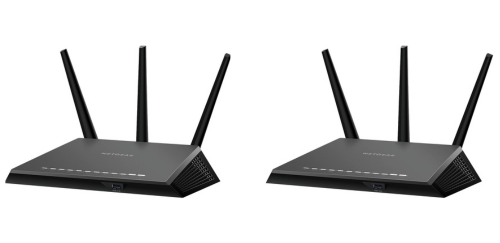
Why Do I Recommend The Nighthawk AC2300?
- The Nighthawk AC2300 features a 4×4 spatial stream configuration on the 5GHz band for handling more simultaneous high-bandwidth devices such as 4K streaming TVs and gaming consoles without congestion, while the Nighthawk AC1900 uses a 3×3 spatial stream configuration on the 5GHz band.
- Nighthawk AC2300 comes with 2300 Mbps combined wireless speed for maintaining higher aggregate throughput during heavy multitasking across multiple connected devices, whereas the Nighthawk AC1900 supports up to 1900 Mbps combined speed.
- It supports 1625 Mbps on the 5GHz band for delivering faster file downloads and lower latency during online gaming sessions, while the Nighthawk AC1900 supports up to 1300 Mbps on the 5GHz band.
- The Nighthawk AC2300 includes 4×4 MU-MIMO capability for transmitting data to more compatible devices at the same time without sequential buffering delays, while the Nighthawk AC1900 includes 3×3 MU-MIMO capability.
- Nighthawk AC2300 comes with an 802.11ac Wave 2 WiFi chipset for enabling higher data rates and improved multi-user efficiency under load, whereas the Nighthawk AC1900 uses an 802.11ac Wave 1 chipset.
- It features advanced Beamforming+ tuning for directing stronger signal focus toward connected devices across larger floor plans, while the Nighthawk AC1900 features standard beamforming implementation.
- The Nighthawk AC2300 includes a 4×4 antenna transmission design on the 5GHz band for sustaining more stable throughput during simultaneous UHD streaming and video conferencing, while the Nighthawk AC1900 operates with a 3×3 antenna design on the same band.
- Nighthawk AC2300 supports higher recommended concurrent device capacity for maintaining consistent bandwidth allocation in homes with dozens of smart devices connected at once, whereas the Nighthawk AC1900 is rated for a lower simultaneous device load.
Maybe the Nighthawk AC1900 can make you comfortable because it’s a little bit cheaper than the Nighthawk AC2300. But you have to compromise all the above-mentioned features. Now the Decision is Yours. I hope it was helpful to choose the right one.
Side-by-Side Comparison
| Feature | Nighthawk AC2300 | Nighthawk AC1900 |
| Wi-Fi Class | AC2300 | AC1900 |
| Combined Max Speed (Mbps) | 2300 | 1900 |
| 5 GHz Max PHY Rate (Mbps) | 1625 | 1300 |
| 5 GHz Spatial Streams | 4 | 3 |
| MU-MIMO Streams | 4×4 | 3×3 |
| 5 GHz Wi-Fi Chipset Spec | 802.11ac Wave2 | 802.11ac Wave1 |
| Beamforming Type | Advanced Beamforming+ | Standard Beamforming |
| USB Ports | USB 3.0 ×1 + USB 2.0 ×1 | USB 3.0 ×1 |
| Priority QoS | Dynamic QoS | Standard QoS |
| Price | Check Nighthawk AC2300 Price | Check Nighthawk AC1900 Price |
What Common Both Can Do?
- WiFi Standard: Both routers support the 802.11ac WiFi standard, ensuring compatibility with a wide range of modern devices. This allows users to connect smartphones, laptops, gaming consoles, and smart home devices without compatibility concerns.
- Dual-Band Support: Each model operates on both 2.4GHz and 5GHz frequency bands. This helps distribute traffic efficiently and allows users to balance range and speed depending on their needs.
- 2.4GHz Band: Both routers include a 2.4GHz band for extended coverage and better wall penetration. This band is ideal for smart home devices and general browsing across larger areas.
- 5GHz Band: Both models support the 5GHz band for higher-speed connections. This is particularly useful for streaming, gaming, and high-bandwidth activities.
- Gigabit LAN Ports: Each router includes four Gigabit Ethernet LAN ports. This ensures stable wired connections for desktop PCs, gaming consoles, and network-attached storage devices.
- Gigabit WAN Port: Both devices feature a Gigabit WAN port for high-speed internet connections. This supports broadband plans up to 1 Gbps without bottlenecks at the router level.
- USB 3.0 Port: Each model includes a USB 3.0 port for connecting external storage devices. This allows file sharing across the network and supports media streaming from attached drives.
- External Antennas: Both routers use external antennas to enhance wireless signal coverage. External antenna design helps improve signal reach throughout the home.
- Beamforming Technology: Both models include beamforming to direct WiFi signals toward connected devices. This helps maintain stable connections and consistent performance.
- MU-MIMO Support: Each router supports MU-MIMO technology for handling multiple devices simultaneously. This is beneficial in homes with several connected devices streaming or gaming at the same time.
- Smart Connect: Both routers offer Smart Connect functionality to automatically assign devices to the optimal band. This simplifies network management and improves performance distribution.
- Guest Network: Each model supports separate guest networks. This allows visitors to access the internet without accessing the main network or shared files.
- WPA/WPA2 Security: Both routers include WPA and WPA2 encryption standards. This ensures secure wireless connections and protection against unauthorized access.
- IPv6 Support: Both devices support IPv6 networking. This provides future-proof compatibility with modern internet infrastructure.
- Parental Controls: Each router includes parental control features. This allows users to manage internet access schedules and filter content for specific devices.
- Dynamic QoS: Both models feature Dynamic Quality of Service. This helps prioritize bandwidth for streaming, gaming, or video calls when multiple devices are active.
- ReadySHARE USB Access: Both routers support ReadySHARE for network file sharing. This enables convenient access to connected storage devices from any device on the network.
- VPN Support: Each model supports VPN functionality. This allows secure remote access to the home network.
- Nighthawk App Support: Both routers are compatible with the Nighthawk mobile app. This makes setup, monitoring, and network management straightforward from a smartphone.
Common Features
| Feature | Nighthawk AC2300 | Nighthawk AC1900 |
| WiFi Standard | 802.11ac | 802.11ac |
| Dual-Band Support | Yes | Yes |
| 2.4GHz Band | Yes | Yes |
| 5GHz Band | Yes | Yes |
| Gigabit LAN Ports | 4 × Gigabit | 4 × Gigabit |
| Gigabit WAN Port | 1 × Gigabit | 1 × Gigabit |
| USB 3.0 Port | Yes | Yes |
| External Antennas | Yes | Yes |
| Beamforming Technology | Yes | Yes |
| MU-MIMO Support | Yes | Yes |
| Smart Connect | Yes | Yes |
| Guest Network | Yes | Yes |
| WPA/WPA2 Security | Yes | Yes |
| IPv6 Support | Yes | Yes |
| Parental Controls | Yes | Yes |
| Dynamic QoS | Yes | Yes |
| ReadySHARE USB Access | Yes | Yes |
| VPN Support | Yes | Yes |
| Nighthawk App Support | Yes | Yes |
| Price | Check Nighthawk AC2300 Price | Check Nighthawk AC1900 Price |
FAQ
Is Nighthawk AC2300 faster than Nighthawk AC1900? Do both routers support dual-band connectivity? Are both routers suitable for gaming? Do both models support MU-MIMO technology? How many wired devices can be connected to each router? Do these routers support Gigabit internet plans? Is USB file sharing available on both models? Do both routers support guest networks? Are parental control features available on both routers? Do Nighthawk AC2300 and AC1900 support Smart Connect? Is beamforming included in both routers? Can both routers be managed through a mobile app? Are these routers compatible with IPv6? Which router is better for homes with many connected devices? |