Netgear R6700 & Netgear R6400 share many similarities, but there are also important differences, such as quality, performance, features, design, and connectivity. If you want the best one between them, I Would recommend the Netgear R6700 rather than the Netgear R6400.
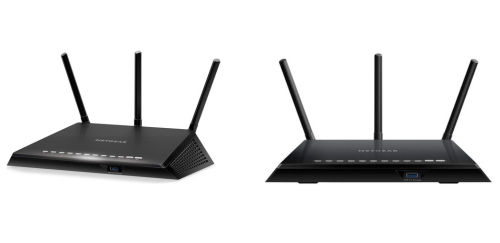
Why Do I Recommend The Netgear R6700?
- The Netgear R6700 comes with a dual-core 800 MHz processor for maintaining stable throughput during simultaneous streaming, gaming, and file transfers, while the Netgear R6400 uses a 600 MHz processor in common hardware versions.
- Netgear R6700 has 256 MB RAM for handling a higher number of concurrent devices and background services without interface slowdowns, whereas the Netgear R6400 commonly has 128 MB RAM.
- It features a Broadcom BCM4708/4709-class SoC for sustained NAT processing and reduced latency under heavy traffic loads, while the Netgear R6400 commonly uses a lower-tier Broadcom BCM47xx-class chipset.
- The Netgear R6700 supports higher USB storage throughput for faster network file transfers and smoother HD media streaming from attached drives, while the Netgear R6400 processes USB data at lower speeds due to reduced hardware resources.
- Netgear R6700 comes with greater VPN processing capacity to maintain higher encrypted throughput for remote access connections, whereas the Netgear R6400 handles VPN traffic at lower speeds under the same conditions.
- It has a higher session table headroom for supporting more simultaneous device connections and background cloud activity without connection drops, while the Netgear R6400 manages fewer concurrent sessions.
- The Netgear R6700 features 128 MB flash memory for supporting larger firmware builds and extended feature integration, while Netgear R6400 regional variants include 16 MB flash storage.
- Netgear R6700 includes the Nighthawk firmware branch for access to advanced configuration controls and performance-focused interface features, whereas the Netgear R6400 uses the Smart WiFi firmware branch with a simplified configuration layout.
Maybe the Netgear R6400 can make you comfortable because it’s a little bit cheaper than the Netgear R6700. But you have to compromise all the above-mentioned features. Now the Decision is Yours. I hope it was helpful to choose the right one.
Side-by-Side Comparison
| Feature | Netgear R6700 | Netgear R6400 |
| Product line | Nighthawk | Smart WiFi |
| Common SoC | Broadcom BCM4709 | Broadcom BCM4708A0 |
| CPU cores | 2 | 1 |
| CPU clock | 800 MHz | 600 MHz |
| RAM | 256 MB | 128 MB |
| Flash storage | 128 MB | 16 MB |
| LED / chassis family | Nighthawk chassis/LED layout | Smart WiFi chassis/LED layout |
| Stock firmware branch naming | Nighthawk firmware package naming | Smart WiFi firmware package naming |
| USB file-sharing throughput class | Higher-throughput class | Lower-throughput class |
| VPN throughput class | Higher-throughput class | Lower-throughput class |
| NAT/session table headroom class (typical) | Higher-session class | Lower-session class |
| Price | Check Netgear R6700 Price | Check Netgear R6400 Price |
What Common Both Can Do?
- WiFi Standard: Both routers support the 802.11a/b/g/n/ac wireless standards, ensuring compatibility with a wide range of older and newer WiFi devices. This allows laptops, smartphones, gaming consoles, and smart home devices to connect without compatibility issues.
- WiFi Class: Each model is rated as AC1750, meaning they share the same combined theoretical wireless bandwidth rating. This ensures similar overall wireless capacity across both routers for general home networking tasks.
- Total Max WiFi Speed: Both routers provide a combined maximum wireless speed of up to 1750 Mbps. This is suitable for HD and 4K streaming, online gaming, and large file downloads in typical household environments.
- 2.4 GHz Speed: Both units deliver up to 450 Mbps on the 2.4 GHz band. This band is useful for longer-range coverage and compatibility with older or IoT devices that do not support 5 GHz.
- 5 GHz Speed: Each router supports up to 1300 Mbps on the 5 GHz band. This higher-frequency band is ideal for faster data transfers, reduced interference, and smoother streaming or gaming experiences.
- Dual-Band Support: Both models operate on 2.4 GHz and 5 GHz bands simultaneously. This helps distribute devices efficiently and reduces congestion on a single frequency band.
- Gigabit WAN Port: Each router includes one 10/100/1000 Mbps WAN port for connecting to a modem. This ensures compatibility with high-speed broadband connections.
- Gigabit LAN Ports: Both routers feature four Gigabit Ethernet LAN ports. These ports allow wired connections for PCs, gaming consoles, or smart TVs with stable and fast network performance.
- USB 3.0 Port: Both models include one USB 3.0 port for connecting external storage devices or printers. This enables network file sharing and media streaming through the router.
- USB 2.0 Port: Each router also includes a USB 2.0 port for additional storage or peripheral connections. This adds flexibility for users who need multiple USB-connected devices.
- External Antennas: Both devices come with three external antennas. These antennas help improve signal strength and coverage across different areas of a home.
- Beamforming: Each router supports beamforming technology. This allows the wireless signal to focus more directly toward connected devices instead of broadcasting equally in all directions.
- WPA/WPA2 Security: Both routers support WPA and WPA2 encryption standards. This protects the network from unauthorized access and secures user data.
- Guest Network: Each model allows users to create a separate guest WiFi network. This keeps visitors isolated from the main network and enhances security.
- Parental Controls: Both routers include parental control features. These tools allow users to manage internet access, filter content, and set usage schedules.
- Dynamic QoS: Each router supports Dynamic Quality of Service. This helps prioritize traffic for activities like streaming or gaming to maintain stable performance.
- IPv6 Support: Both devices support IPv6 networking. This ensures compatibility with modern internet infrastructure and future-proof connectivity.
- VPN Support: Each router supports VPN functionality. This enables secure remote access to the home network when configured properly.
- ReadySHARE USB: Both routers support Netgear’s ReadySHARE feature for USB storage sharing. This allows users to access files over the network from connected drives.
- MU-MIMO: Both models belong to the standard AC generation without advanced multi-user enhancements found in later WiFi versions. This places them in the same WiFi performance class for multi-device handling within their generation.
Common Features
| Feature | Netgear R6700 | Netgear R6400 |
| WiFi Standard | 802.11a/b/g/n/ac | 802.11a/b/g/n/ac |
| WiFi Class | AC1750 | AC1750 |
| Total Max WiFi Speed | 1750 Mbps | 1750 Mbps |
| 2.4 GHz Speed | Up to 450 Mbps | Up to 450 Mbps |
| 5 GHz Speed | Up to 1300 Mbps | Up to 1300 Mbps |
| Dual-Band Support | Yes | Yes |
| Gigabit WAN Port | 1 × 10/100/1000 Mbps | 1 × 10/100/1000 Mbps |
| Gigabit LAN Ports | 4 × 10/100/1000 Mbps | 4 × 10/100/1000 Mbps |
| USB 3.0 Port | 1 × USB 3.0 | 1 × USB 3.0 |
| USB 2.0 Port | 1 × USB 2.0 | 1 × USB 2.0 |
| External Antennas | 3 | 3 |
| Beamforming | Yes | Yes |
| WPA/WPA2 Security | Yes | Yes |
| Guest Network | Yes | Yes |
| Parental Controls | Yes | Yes |
| Dynamic QoS | Yes | Yes |
| IPv6 Support | Yes | Yes |
| VPN Support | Yes | Yes |
| ReadySHARE USB | Yes | Yes |
| MU-MIMO | No | No |
| Price | Check Netgear R6700 Price | Check Netgear R6400 Price |
FAQ
Is there any speed difference between Netgear R6700 and Netgear R6400? Do both routers support dual-band WiFi? Can both routers handle Gigabit internet connections? Do they both include USB ports for storage sharing? Are the security features the same on both models? Do Netgear R6700 and Netgear R6400 support guest networks? Is parental control available on both routers? Do both routers support Dynamic QoS? Are the antennas the same on both routers? Do both routers support beamforming technology? Can both routers be used for online gaming? Is VPN support available on both models? Do they support IPv6 networking? Can both routers handle multiple connected devices? Are firmware updates available for both routers? |