NETGEAR CAX80 & NETGEAR C7800 share many similarities, but there are also important differences, such as quality, performance, features, design, and connectivity. If you want the best one between them, I Would recommend the NETGEAR CAX80 rather than the NETGEAR C7800.
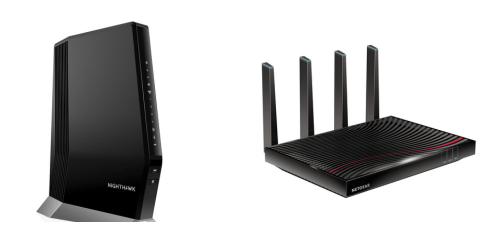
Why Do I Recommend The NETGEAR CAX80?
- The NETGEAR CAX80 features WiFi 6 (802.11ax) for improved efficiency and lower latency when multiple devices are connected simultaneously, whereas the NETGEAR C7800 uses WiFi 5 (802.11ac).
- NETGEAR CAX80 comes with an AX6000 WiFi rating (up to 6000Mbps) for handling higher aggregate wireless throughput across busy households, while the NETGEAR C7800 comes with an AC3200 WiFi rating (up to 3200Mbps).
- It supports 160MHz channel width for higher single-device data rates on compatible 5GHz clients, while the NETGEAR C7800 uses 80MHz channel width.
- The NETGEAR CAX80 includes OFDMA technology for simultaneous data transmission to multiple devices with reduced congestion, whereas the NETGEAR C7800 does not support OFDMA.
- NETGEAR CAX80 features an 8-stream WiFi design for increased spatial data streams and higher multi-device bandwidth allocation, while the NETGEAR C7800 uses a 4-stream configuration.
- It comes with a 2.5Gbps multi-gig Ethernet port to support internet plans above 1Gbps without creating a wired bottleneck, while the NETGEAR C7800 comes with 1Gbps Ethernet ports only.
- The NETGEAR CAX80 supports link aggregation for combining two Gigabit Ethernet ports into a 2Gbps connection for compatible NAS devices, whereas the NETGEAR C7800 does not support Ethernet port aggregation.
- NETGEAR CAX80 includes NETGEAR Armor security software for real-time network threat protection and device-level security monitoring, while the NETGEAR C7800 does not include NETGEAR Armor as a bundled security feature.
Maybe the NETGEAR C7800 can make you comfortable because it’s a little bit cheaper than the NETGEAR CAX80. But you have to compromise all the above-mentioned features. Now the Decision is Yours. I hope it was helpful to choose the right one.
Side-by-Side Comparison
| Feature | NETGEAR CAX80 | NETGEAR C7800 |
| Wi-Fi standard | WiFi 6 | WiFi 5 |
| Wi-Fi class | AX6000 | AC3200 |
| Total Wi-Fi throughput | 6000 Mbps | 3200 Mbps |
| 2.4GHz max rate | 1200 Mbps | 1000 Mbps |
| 5GHz max rate | 4800 Mbps | 2200 Mbps |
| 5GHz channel width | 160 MHz | 80 MHz |
| MU-MIMO streams | 8 | 4 |
| OFDMA support | Yes | No |
| Ethernet multi-gig port | 1 × 2.5Gbps | 0 × 2.5Gbps |
| WAN aggregation | Yes | No |
| NETGEAR Armor | Included trial | Not included trial |
| Price | Check NETGEAR CAX80 Price | Check NETGEAR C7800 Price |
What Common Both Can Do?
- Built-in cable modem: Both devices integrate a cable modem directly into the unit, eliminating the need for a separate modem. This reduces cable clutter and simplifies installation for home internet setups.
- Router + modem combo: Each model combines routing and modem functionality in one chassis. This allows users to manage their entire home network through a single device instead of maintaining multiple components.
- DOCSIS 3.1 support: Both models support the DOCSIS 3.1 cable standard, enabling compatibility with modern high-speed cable internet plans. This standard allows higher downstream and upstream data throughput compared to older DOCSIS revisions.
- Backward compatibility (DOCSIS 3.0): Each unit is compatible with DOCSIS 3.0 networks. This ensures functionality even in areas where full DOCSIS 3.1 deployment has not yet occurred.
- Dual-band WiFi: Both routers operate on two wireless frequency bands simultaneously. This allows devices to distribute traffic between bands for balanced wireless performance.
- 2.4GHz band: Each model provides a 2.4GHz wireless band. This band offers extended signal range and better wall penetration for distant or low-bandwidth devices.
- 5GHz band: Both devices include a 5GHz wireless band. This band supports higher data rates and reduced interference in environments with many connected devices.
- Gigabit Ethernet LAN ports: Each unit includes four 1Gbps Ethernet LAN ports. This allows wired devices such as gaming consoles, PCs, and smart TVs to connect at full gigabit speeds.
- USB 3.0 port: Both models provide at least one USB 3.0 port. This enables connection of external storage drives for local file sharing across the home network.
- Beamforming technology: Each router supports beamforming. This technology directs WiFi signals toward connected devices rather than broadcasting uniformly in all directions.
- MU-MIMO support: Both devices support MU-MIMO. This allows simultaneous data streams to multiple compatible devices instead of sequential communication.
- IPv6 support: Each model supports IPv6 networking. This ensures compatibility with modern IP addressing standards used by internet service providers.
- WPA/WPA2 wireless security: Both units include WPA/WPA2 encryption standards. This protects wireless traffic from unauthorized access.
- Guest WiFi network: Each router allows configuration of a separate guest network. This lets visitors access the internet without exposing the primary home network.
- Web-based management interface: Both devices provide a browser-based configuration interface. This allows network settings, firmware updates, and security options to be adjusted from a computer or mobile device.
- Compatible with major U.S. cable ISPs: Each modem-router is designed for use with major cable providers. This ensures activation compatibility and service provisioning through supported ISPs.
- LED status indicators: Both units include front-panel LED indicators. These lights display power, internet connection, and activity status for quick visual diagnostics.
Common Features
| Feature | NETGEAR CAX80 | NETGEAR C7800 |
| Built-in cable modem | Yes | Yes |
| Router + modem combo | Yes | Yes |
| DOCSIS 3.1 support | Yes | Yes |
| Backward compatibility (DOCSIS 3.0) | Yes | Yes |
| Dual-band WiFi | Yes | Yes |
| 2.4GHz band | Yes | Yes |
| 5GHz band | Yes | Yes |
| Gigabit Ethernet LAN ports | 4 × 1Gbps | 4 × 1Gbps |
| USB 3.0 port | Yes | Yes |
| Beamforming technology | Yes | Yes |
| MU-MIMO support | Yes | Yes |
| IPv6 support | Yes | Yes |
| WPA/WPA2 wireless security | Yes | Yes |
| Guest WiFi network | Yes | Yes |
| Web-based management interface | Yes | Yes |
| Compatible with major U.S. cable ISPs | Yes | Yes |
| LED status indicators | Yes | Yes |
| Price | Check NETGEAR CAX80 Price | Check NETGEAR C7800 Price |