Netgear C7000 & Netgear C6900 share many similarities, but there are also important differences, such as quality, performance, features, design, and connectivity. If you want the best one between them, I Would recommend the Netgear C7000 rather than the Netgear C6900.
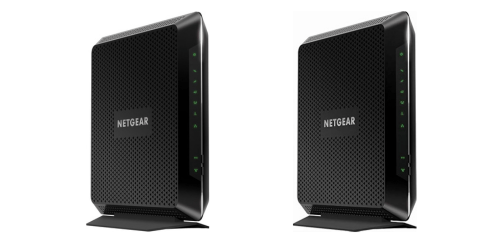
Why Do I Recommend The Netgear C7000?
- The NETGEAR C7000 has a 1.6 GHz dual-core processor for handling higher simultaneous traffic loads and maintaining stable performance during multiple HD streams and online gaming sessions, while the NETGEAR C6900 uses a 1.0 GHz processor.
- NETGEAR C7000 supports the Nighthawk App for remote network management, device monitoring, and firmware updates from anywhere, whereas the NETGEAR C6900 uses the NETGEAR Genie interface with more limited remote control functionality.
- It includes Dynamic QoS for automatic bandwidth prioritization that keeps gaming and streaming traffic stable during heavy downloads, while the NETGEAR C6900 uses standard QoS settings without dynamic traffic detection.
- The NETGEAR C7000 features Beamforming+ technology for directing stronger Wi-Fi signals toward connected devices to maintain consistent signal strength across rooms, while the NETGEAR C6900 supports standard beamforming implementation.
- NETGEAR C7000 supports ReadySHARE Vault for automatic PC backup over the network to protect important files without third-party software, while the NETGEAR C6900 supports basic USB file sharing only.
- It comes with enhanced VPN passthrough configuration options for secure remote access to the home network from external locations, whereas the NETGEAR C6900 supports standard VPN passthrough settings.
- The NETGEAR C7000 includes advanced traffic monitoring tools within the Nighthawk interface for tracking real-time bandwidth usage per connected device, while the NETGEAR C6900 provides basic traffic meter functionality.
- NETGEAR C7000 supports higher ISP plan certification tiers up to 600 Mbps for compatibility with faster cable internet packages, while the NETGEAR C6900 is commonly certified for lower maximum ISP speed tiers.
Maybe the Netgear C6900 can make you comfortable because it’s a little bit cheaper than the Netgear C7000. But you have to compromise all the above-mentioned features. Now the Decision is Yours. I hope it was helpful to choose the right one.
Side-by-Side Comparison
| Feature | Netgear C7000 | Netgear C6900 |
| Mobile app name | Nighthawk App | Not specified |
| App remote management | Yes | Not specified |
| App feature: Pause Internet | Yes | Not specified |
| App feature: Traffic Meter | Yes | Not specified |
| App feature: Device Manager | Yes | Not specified |
| USB port (type / count) | 1 × USB 2.0 | Not specified |
| ReadySHARE (USB storage sharing) | Yes | Not specified |
| ReadySHARE (USB printer sharing) | Yes | Not specified |
| DLNA server | Yes | Not specified |
| ISP certification stated (Xfinity) | Up to 600 Mbps | Not specified |
| ISP certification stated (Spectrum) | 400 Mbps | Not specified |
| ISP certification stated (Cox) | 150 Mbps | Not specified |
| Security feature: personal FTP URL | Yes | Not specified |
| Price | Check Netgear C7000 Price | Check Netgear C6900 Price |
What Common Both Can Do?
- DOCSIS 3.0: Both models use DOCSIS 3.0 technology, allowing them to support high-speed cable internet connections through bonded channels. This ensures compatibility with a wide range of cable internet plans and stable wired broadband performance.
- 24×8 Channel Bonding: Each device supports 24 downstream and 8 upstream channels. This channel configuration allows consistent throughput and supports higher-tier cable speed plans from supported ISPs.
- Wi-Fi 5 (802.11ac): Both routers operate on the 802.11ac wireless standard. This provides faster wireless speeds and better spectrum efficiency compared to older Wi-Fi 4 devices.
- AC1900 Wi-Fi Class: Each unit is rated as AC1900. This classification reflects a combined theoretical bandwidth of 1900 Mbps across both wireless bands.
- 2.4 GHz Speed (Up to 600 Mbps): Both support up to 600 Mbps on the 2.4 GHz band. This band provides broader coverage and compatibility with legacy wireless devices.
- 5 GHz Speed (Up to 1300 Mbps): Each device supports up to 1300 Mbps on the 5 GHz band. This enables faster data transfer rates for streaming, gaming, and large downloads.
- Dual-Band Support: Both models broadcast separate 2.4 GHz and 5 GHz networks. This allows devices to connect to the most appropriate frequency for speed or range.
- 4 × Gigabit Ethernet Ports: Each unit includes four 10/100/1000 Mbps LAN ports. These ports provide stable wired connections for desktops, gaming consoles, smart TVs, and network switches.
- USB 2.0 Port: Both devices include one USB 2.0 port. This enables basic network storage sharing or printer sharing across connected devices.
- IPv6 Support: Each modem-router combo supports IPv6 addressing. This ensures compatibility with modern internet infrastructure and future network expansion.
- Beamforming: Both include beamforming technology. This helps direct Wi-Fi signals toward connected devices instead of broadcasting uniformly in all directions.
- Guest Network: Each router supports a separate guest Wi-Fi network. This allows visitors to access the internet without exposing the main network credentials.
- WPA/WPA2 Security: Both support WPA and WPA2 wireless encryption standards. This protects the network from unauthorized access and ensures encrypted data transmission.
- Parental Controls: Each model includes parental control functionality. This allows administrators to manage content access and internet schedules for connected devices.
- Compatible with Major US Cable ISPs: Both devices are approved for use with major US cable internet providers. This makes them suitable replacements for ISP-rented modem-router equipment.
- Integrated Cable Modem + Router: Each unit combines a cable modem and Wi-Fi router in one chassis. This reduces equipment clutter and simplifies installation.
- Push ‘N’ Connect (WPS): Both support WPS setup. This allows compatible devices to connect securely with a single button press rather than manual password entry.
Common Features
| Feature | Netgear C7000 | Netgear C6900 |
| DOCSIS Version | DOCSIS 3.0 | DOCSIS 3.0 |
| Channel Bonding | 24×8 | 24×8 |
| Wi-Fi Standard | Wi-Fi 5 (802.11ac) | Wi-Fi 5 (802.11ac) |
| Wi-Fi Class | AC1900 | AC1900 |
| 2.4 GHz Speed | Up to 600 Mbps | Up to 600 Mbps |
| 5 GHz Speed | Up to 1300 Mbps | Up to 1300 Mbps |
| Dual-Band Support | Yes | Yes |
| Gigabit Ethernet Ports | 4 × 10/100/1000 Mbps | 4 × 10/100/1000 Mbps |
| USB Port | 1 × USB 2.0 | 1 × USB 2.0 |
| IPv6 Support | Yes | Yes |
| Beamforming | Yes | Yes |
| Guest Network | Yes | Yes |
| WPA/WPA2 Security | Yes | Yes |
| Parental Controls | Yes | Yes |
| Compatible with Major US Cable ISPs | Yes | Yes |
| Integrated Cable Modem + Router | Yes | Yes |
| Push ‘N’ Connect (WPS) | Yes | Yes |
| Price | Check Netgear C7000 Price | Check Netgear C6900 Price |
FAQ
What type of internet connection do NETGEAR C7000 and NETGEAR C6900 support? Are NETGEAR C7000 and NETGEAR C6900 compatible with major cable providers? What Wi-Fi standard do NETGEAR C7000 and NETGEAR C6900 use? What is the maximum wireless speed of NETGEAR C7000 and NETGEAR C6900? How many Ethernet ports are available on NETGEAR C7000 and NETGEAR C6900? Do NETGEAR C7000 and NETGEAR C6900 support channel bonding? Can NETGEAR C7000 and NETGEAR C6900 create a guest network? Do these models support IPv6? Is beamforming supported on both devices? Do NETGEAR C7000 and NETGEAR C6900 include USB ports? Are parental controls available on NETGEAR C7000 and NETGEAR C6900? Do NETGEAR C7000 and NETGEAR C6900 support wireless security encryption? Can these devices replace ISP modem and router rentals? Are NETGEAR C7000 and NETGEAR C6900 suitable for HD streaming and gaming? Do NETGEAR C7000 and NETGEAR C6900 support WPS setup? |