AirPods Pro 3 & JBL Tour Pro 3 share many similarities, but there are also important differences, such as quality, performance, features, design, and connectivity. If you want the best one between them, I Would recommend the AirPods Pro 3 rather than the JBL Tour Pro 3.
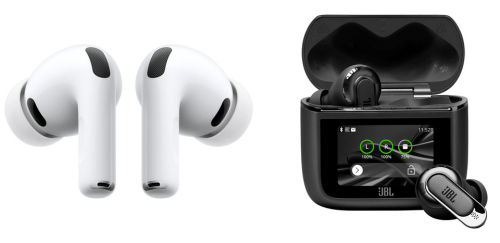
Why Do I Recommend The AirPods Pro 3?
- The AirPods Pro 3 features the Apple H2 chip for real-time adaptive audio processing and seamless device switching across Apple devices, whereas the JBL Tour Pro 3 uses a standard proprietary platform without deep ecosystem-level optimization.
- AirPods Pro 3 supports automatic Apple device switching for instant transitions between iPhone, iPad, and Mac without manual reconnection, while the JBL Tour Pro 3 uses standard Bluetooth multipoint switching.
- It includes a built-in PPG heart rate sensor for tracking biometric data during workouts and daily activities, whereas the JBL Tour Pro 3 does not include any health monitoring sensors.
- The AirPods Pro 3 features optimized low-latency audio integration with Apple devices for smoother video playback and gaming synchronization, while the JBL Tour Pro 3 relies on standard Bluetooth latency performance.
- AirPods Pro 3 includes personalized spatial audio with dynamic head tracking for more accurate sound positioning based on head movement, whereas the JBL Tour Pro 3 uses a generalized spatial audio system.
- It comes with a lighter 5.6 g earbud weight for reduced ear fatigue during long listening sessions, whereas the JBL Tour Pro 3 weighs approximately 6.1 g per earbud.
- The AirPods Pro 3 includes IP57 dust and water resistance for protection against sweat, rain, and dust exposure during outdoor and workout use, whereas the JBL Tour Pro 3 does not specify an official IP rating.
- AirPods Pro 3 comes with five ear tip sizes for a more precise fit and improved passive noise isolation across different ear shapes, whereas the JBL Tour Pro 3 includes three ear tip sizes.
Maybe the JBL Tour Pro 3 can make you comfortable because it’s a little bit cheaper than the AirPods Pro 3. But you have to compromise all the above-mentioned features. Now the Decision is Yours. I hope it was helpful to choose the right one.
Side-by-Side Comparison
| Feature | AirPods Pro 3 | JBL Tour Pro 3 |
| Driver Type | Single dynamic driver | 10.2 mm dynamic + balanced armature |
| Bluetooth Version | 5.3 | 5.3 LE Audio |
| Chipset | Apple H2 chip | JBL proprietary platform |
| Spatial Audio | Apple Spatial Audio | JBL Spatial 360 |
| ANC Type | Adaptive ANC | True Adaptive ANC 2.0 |
| Voice Assistant | Siri | Google Assistant, Alexa |
| Earbud Weight | 5.6 g | ~6.1 g |
| Water Resistance | IP57 | Not specified |
| Heart Rate Sensor | PPG sensor | None |
| Ear Tip Count | 5 sizes | 3 sizes |
| Ecosystem Integration | Apple | Cross-platform |
| Multi-Device Pairing | Apple automatic switching | Bluetooth multipoint |
| Price | Check AirPods Pro 3 Price | Check JBL Tour Pro 3 Price |
What Common Both Can Do?
- True Wireless Design: Both earbuds use a completely wireless form factor with no cables connecting the earbuds or the device. This ensures maximum portability and convenience for daily use such as commuting, workouts, or travel.
- Active Noise Cancellation: Both models include active noise cancellation technology that reduces external ambient noise. This allows users to focus on music or calls in noisy environments like airplanes, streets, or offices.
- Transparency Mode: Each device includes a transparency or ambient listening mode that lets outside sound pass through. This feature is useful for staying aware of surroundings without removing the earbuds.
- Spatial Audio Support: Both earbuds support spatial audio processing for a more immersive soundstage. This creates a sense of direction and depth, especially when watching videos or listening to compatible content.
- Bluetooth Connectivity: Both models use Bluetooth 5.3 for wireless communication with devices. This ensures stable connections, lower latency, and efficient power consumption.
- Touch Controls: Both earbuds include touch-sensitive controls on the surface of each earbud. Users can manage playback, calls, and features directly without reaching for their phone.
- In-Ear Fit: Both products are designed as in-ear earbuds that sit inside the ear canal. This design helps with passive noise isolation and secure fit during movement.
- Silicone Ear Tips: Both come with interchangeable silicone ear tips. This allows users to choose the best size for comfort and proper seal, which directly impacts sound quality and ANC performance.
- Wireless Charging Case: Each model includes a charging case that supports wireless charging. This adds convenience by allowing charging without cables using compatible charging pads.
- USB-C Charging: Both charging cases use a USB-C port for wired charging. This provides faster charging speeds and compatibility with modern charging accessories.
- Fast Charging: Both earbuds support fast charging functionality. A short charging time provides several hours of playback, which is useful in time-sensitive situations.
- Multipoint Connection: Both models support connection to multiple devices simultaneously. This allows seamless switching between devices such as phones and laptops.
- Companion Mobile App: Both earbuds are supported by a dedicated mobile app. These apps allow users to adjust settings, update firmware, and customize controls.
- Firmware Updates: Both products support firmware updates through their respective apps. This ensures continued improvements, bug fixes, and feature enhancements over time.
- Voice Assistant Support: Both earbuds integrate with voice assistants. This enables hands-free control for tasks like calling, messaging, and controlling music.
- Built-in Microphones: Both models include multiple built-in microphones. These microphones are used for calls, voice commands, and noise cancellation processing.
- Call Noise Reduction: Both devices use noise reduction technology during calls. This helps isolate the user’s voice and reduce background noise for clearer communication.
- Automatic Ear Detection: Both earbuds can detect when they are in or out of the ears. Playback automatically pauses or resumes, improving convenience and saving battery life.
- Rechargeable Battery: Both products use rechargeable lithium-based batteries. This allows repeated use without replacing batteries, supporting long-term usability.
- Stereo Audio Playback: Both earbuds provide true stereo sound with separate left and right channels. This ensures proper audio imaging and a balanced listening experience.
Common Features
| Feature | AirPods Pro 3 | JBL Tour Pro 3 |
| True Wireless Design | Yes | Yes |
| Active Noise Cancellation | Yes | Yes |
| Transparency Mode | Yes | Yes |
| Spatial Audio Support | Yes | Yes |
| Bluetooth Connectivity | Bluetooth 5.3 | Bluetooth 5.3 |
| Touch Controls | Yes | Yes |
| In-Ear Fit | Yes | Yes |
| Silicone Ear Tips | Yes | Yes |
| Wireless Charging Case | Yes | Yes |
| USB-C Charging | Yes | Yes |
| Fast Charging | Yes | Yes |
| Multipoint Connection | Yes | Yes |
| Companion Mobile App | Yes | Yes |
| Firmware Updates | Yes | Yes |
| Voice Assistant Support | Yes | Yes |
| Built-in Microphones | Yes | Yes |
| Call Noise Reduction | Yes | Yes |
| Automatic Ear Detection | Yes | Yes |
| Rechargeable Battery | Yes | Yes |
| Stereo Audio Playback | Yes | Yes |
| Price | Check AirPods Pro 3 Price | Check JBL Tour Pro 3 Price |