DJI Mini 4 Pro & DJI Neo share many similarities, but there are also important differences, such as quality, performance, features, design, and connectivity. If you want the best one between them, I Would recommend the DJI Mini 4 Pro rather than the DJI Neo.
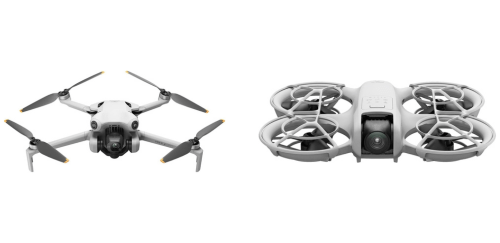
Why Do I Recommend The DJI Mini 4 Pro?
- The DJI Mini 4 Pro features a 1/1.3-inch CMOS camera sensor for capturing higher dynamic range photos and more detailed aerial footage in varied lighting conditions, whereas the DJI Neo uses a 1/2-inch CMOS sensor.
- DJI Mini 4 Pro supports 4K video recording at up to 100 fps for creating slow-motion aerial footage with smooth motion and greater editing flexibility, while the DJI Neo records 4K video at up to 30 fps.
- It comes with a 3-axis mechanical gimbal for stabilizing the camera during rapid movement and windy flight conditions to produce smoother cinematic footage, whereas the DJI Neo uses electronic image stabilization.
- The DJI Mini 4 Pro features omnidirectional obstacle sensing for detecting objects in multiple directions and reducing the risk of collisions during autonomous flight modes, while the DJI Neo includes downward vision sensors only.
- DJI Mini 4 Pro supports up to 34 minutes flight time for capturing longer aerial sessions without frequent battery changes, while the DJI Neo supports 18 minutes flight time.
- It includes the DJI O4 video transmission system for maintaining a stable live video feed and control signal at distances up to 20 km, whereas the DJI Neo uses Wi-Fi transmission with a shorter range around 6 km.
- The DJI Mini 4 Pro supports up to 512 GB microSD cards for storing extended 4K video recordings and high-resolution photos during long flights, while the DJI Neo relies on internal storage without a microSD slot.
- DJI Mini 4 Pro features f/1.7 lens aperture for more light to reach the camera sensor and improving image brightness and detail during sunrise, sunset, or cloudy conditions, whereas the DJI Neo uses an f/2.8 aperture.
Maybe the DJI Neo can make you comfortable because it’s a little bit cheaper than the DJI Mini 4 Pro. But you have to compromise all the above-mentioned features. Now the Decision is Yours. I hope it was helpful to choose the right one.
Side-by-Side Comparison
| Feature | DJI Mini 4 Pro | DJI Neo |
| Camera Sensor | 1/1.3-inch CMOS | 1/2-inch CMOS |
| Photo Resolution | 48 MP | 12 MP |
| Video Resolution | 4K 100 fps | 4K 30 fps |
| HDR Video | 4K 60 fps HDR | Not supported |
| Slow Motion | 4K 100 fps | 1080p 60 fps |
| Lens Aperture | f/1.7 | f/2.8 |
| Equivalent Focal Length | 24 mm | 14 mm |
| Gimbal Stabilization | 3-axis mechanical | Electronic stabilization |
| Obstacle Sensing | Omnidirectional | Downward vision sensor |
| Max Flight Time | 34 min | 18 min |
| Wind Resistance | 10.7 m/s | 8 m/s |
| Video Transmission System | DJI O4 | Wi-Fi transmission |
| Max Transmission Distance | 20 km | 6 km |
| Memory Card Support | microSD up to 512 GB | No SD slot |
| Max Video Bitrate | 150 Mbps | 100 Mbps |
| Max Ascent Speed | 5 m/s | 3 m/s |
| Max Descent Speed | 5 m/s | 2 m/s |
| GNSS Support | GPS + Galileo + BeiDou | GPS + GLONASS |
| Control Method | RC-N2 / RC 2 controller | Smartphone / optional controller |
| Price | Check DJI Mini 4 Pro Price | Check DJI Neo Price |
What Common Both Can Do?
- 4K Video Recording: Both drones support 4K video recording, enabling users to capture high-resolution footage suitable for social media, travel videos, and professional editing. This capability ensures detailed visuals with clear textures and improved image clarity compared with lower resolutions.
- Electronic Image Stabilization: Both models use electronic stabilization technology to reduce camera shake during flight. This stabilization helps produce smoother footage when the drone moves, rotates, or encounters minor wind disturbances.
- GPS Positioning: Both drones include GPS positioning systems that allow accurate location tracking and stable hovering. GPS also enables automated flight functions and helps the drone maintain a consistent position in the air.
- Automatic Return-to-Home: Each drone features an automatic return-to-home function that guides the aircraft back to its launch point. This feature activates when the battery becomes low, the signal is lost, or when the pilot manually triggers the command.
- QuickShots Flight Modes: Both drones support automated QuickShots flight modes designed for cinematic aerial clips. These modes allow the drone to perform programmed flight paths while recording video automatically.
- Intelligent Subject Tracking: Each drone includes subject tracking technology that keeps a person or object centered in the frame during flight. This feature simplifies filming dynamic activities such as cycling, walking, or sports.
- Palm Takeoff / Landing: Both models support palm-based takeoff and landing functions that allow the drone to launch or land directly from the user’s hand. This capability makes operation easier in locations without flat surfaces for takeoff.
- Vertical Video Capture: Both drones support vertical video recording formats suitable for social media platforms. This capability reduces the need for cropping or reformatting footage during editing.
- Smartphone App Control: Each drone connects to the DJI Fly mobile application for flight control, camera settings, and firmware updates. The app interface allows users to adjust flight parameters and camera functions directly from their smartphone.
- Wi-Fi Connectivity: Both drones include Wi-Fi connectivity for communication between the drone and mobile device or controller. This wireless connection allows video transmission and command signals during flight.
- Lithium-ion Battery: Both drones use rechargeable lithium-ion batteries as their power source. Lithium-ion cells provide high energy density and consistent power delivery for stable flight performance.
- Vision Positioning System: Both models include vision sensors that assist with positioning and stabilization when flying indoors or at low altitude. These sensors help the drone maintain accurate hovering even when GPS signals are weak.
- Automatic Hovering: Each drone can maintain a stable hover without continuous manual input. This stability allows users to capture photos and videos more easily and improves overall flight control.
- Built-in Camera: Both drones feature integrated cameras designed specifically for aerial imaging. This integration allows users to record photos and videos without attaching external cameras.
- Brushless Motors: Both drones use brushless motors to power the propellers. Brushless motor technology improves efficiency, reduces wear, and supports smoother and quieter drone operation.
- Firmware Updates via App: Both drones receive firmware updates through the DJI Fly application. These updates introduce new features, performance improvements, and compatibility enhancements over time.
Common Features
| Feature | DJI Mini 4 Pro | DJI Neo |
| 4K Video Recording | Yes | Yes |
| Electronic Image Stabilization | Yes | Yes |
| GPS Positioning | Yes | Yes |
| Automatic Return-to-Home | Yes | Yes |
| QuickShots Flight Modes | Yes | Yes |
| Intelligent Subject Tracking | Yes | Yes |
| Palm Takeoff / Landing | Yes | Yes |
| Vertical Video Capture | Yes | Yes |
| Smartphone App Control | DJI Fly app | DJI Fly app |
| Wi-Fi Connectivity | Yes | Yes |
| Lithium-ion Battery | Yes | Yes |
| Vision Positioning System | Yes | Yes |
| Automatic Hovering | Yes | Yes |
| Built-in Camera | Yes | Yes |
| Brushless Motors | Yes | Yes |
| Firmware Updates via App | Yes | Yes |
| Price | Check DJI Mini 4 Pro Price | Check DJI Neo Price |
FAQ
Which drone has better camera quality, DJI Mini 4 Pro or DJI Neo? Does DJI Mini 4 Pro have better obstacle avoidance than DJI Neo? Which drone has a longer flight time? Is DJI Neo easier for beginners to fly? Can both drones record 4K video? Do both drones support intelligent tracking features? Which drone is lighter? Do both drones support smartphone control? Can both drones shoot vertical videos for social media? Which drone has stronger wind resistance? Do both drones support automatic return-to-home functions? Which drone is better for travel and portability? Do both drones support firmware updates through the DJI app? Which drone is better for professional aerial photography? |