DJI Mini 5 Pro & DJI Neo 2 share many similarities, but there are also important differences, such as quality, performance, features, design, and connectivity. If you want the best one between them, I Would recommend the DJI Mini 5 Pro rather than the DJI Neo 2.
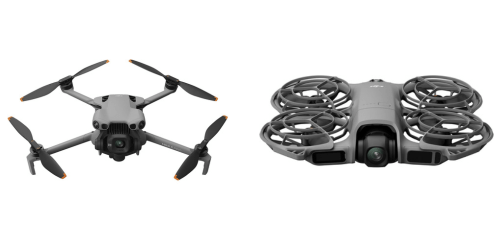
Why Do I Recommend The DJI Mini 5 Pro?
- The DJI Mini 5 Pro features a 1-inch 50 MP CMOS camera sensor for capturing higher-resolution photos with greater detail and improved dynamic range in aerial photography, while the DJI Neo 2 uses a 1/2-inch 12 MP CMOS sensor.
- DJI Mini 5 Pro supports 4K video recording at up to 120 fps for smoother slow-motion footage and more flexibility during cinematic editing, whereas the DJI Neo 2 records 4K video at up to 60 fps.
- It includes a 3-axis mechanical gimbal for stabilizing footage across tilt, roll, and pan movements during fast flight or windy conditions, while the DJI Neo 2 uses a 2-axis gimbal combined with electronic stabilization.
- The DJI Mini 5 Pro comes with a 2788 mAh intelligent flight battery for maintaining longer continuous aerial recording sessions and wider exploration coverage, whereas the DJI Neo 2 uses a 1606 mAh battery.
- DJI Mini 5 Pro supports up to 36 minutes of flight time for capturing extended aerial sequences without frequent battery changes, while the DJI Neo 2 supports approximately 19 minutes of flight time.
- It features an O4+ digital transmission system with up to 20 km video transmission range for maintaining a stable live feed during long-distance aerial filming, whereas the DJI Neo 2 supports around 6 km transmission range.
- The DJI Mini 5 Pro includes a higher maximum horizontal flight speed of 18 m/s for tracking fast-moving subjects such as vehicles or cyclists from greater distances, while the DJI Neo 2 reaches about 12 m/s maximum speed.
- DJI Mini 5 Pro supports −10 °C to 40 °C operating temperature for reliable aerial operation in colder outdoor environments, whereas the DJI Neo 2 operates within a range of 0 °C to 40 °C.
Maybe the DJI Neo 2 can make you comfortable because it’s a little bit cheaper than the DJI Mini 5 Pro. But you have to compromise all the above-mentioned features. Now the Decision is Yours. I hope it was helpful to choose the right one.
Side-by-Side Comparison
| Feature | DJI Mini 5 Pro | DJI Neo 2 |
| Camera Sensor | 1-inch CMOS | 1/2-inch CMOS |
| Photo Resolution | 50 MP | 12 MP |
| Max Video Frame Rate | 4K 120 fps | 4K 60 fps |
| Gimbal Stabilization | 3-axis mechanical | 2-axis mechanical + EIS |
| Aperture | f/1.7 | f/2.2 |
| Battery Capacity | 2788 mAh | 1606 mAh |
| Max Flight Time | 36 min | 19 min |
| Max Horizontal Speed | 18 m/s | 12 m/s |
| Max Wind Resistance | 12 m/s | 10.7 m/s |
| Video Transmission Range | 20 km / 10 km | 6 km |
| Transmission System | O4+ | OcuSync digital link |
| Dimensions (Folded / Body) | 157 × 95 × 68 mm | 147 × 171 × 41 mm |
| Propeller Protection | Open propellers | Full propeller guards |
| Max Tilt Angle | −135° to 80° | −90° to 60° |
| Operating Temperature | −10 °C to 40 °C | 0 °C to 40 °C |
| Launch Method | Ground takeoff | Palm takeoff |
| Landing Method | Ground landing | Palm landing |
| Price | Check DJI Mini 5 Pro Price | Check DJI Neo 2 Price |
What Common Both Can Do?
- 4K Video Recording: Both drones support 4K video recording, allowing users to capture high-resolution footage suitable for social media, content creation, and personal projects. Recording in 4K also preserves more detail in scenes, making editing and cropping easier without significant quality loss.
- HDR Video Support: Both models support HDR video recording. HDR allows the camera to balance highlights and shadows more effectively, helping preserve details in bright skies and darker ground areas during aerial filming.
- Electronic Image Stabilization: Each drone incorporates electronic image stabilization to reduce shake during flight. This stabilization helps maintain smooth video footage even when the drone encounters small wind disturbances.
- Intelligent Flight Modes: Both drones include intelligent automated flight modes designed to simplify aerial filming. These modes allow users to capture cinematic movements without manually controlling every aspect of the flight path.
- Subject Tracking: Both drones support subject tracking capabilities that allow the camera to follow a person, vehicle, or object. This feature helps creators film moving subjects while keeping them centered in the frame.
- QuickShots Automatic Modes: Each drone includes QuickShots automated shooting modes that perform preset flight movements while recording video. These modes simplify capturing dynamic aerial clips such as orbit shots or reveal shots.
- Smartphone App Control: Both drones can be controlled through a smartphone application. The app provides flight telemetry, camera settings, and live view controls directly on the mobile device.
- GPS Positioning: Both drones use GPS positioning systems to maintain stable hovering and accurate navigation. GPS also allows the drone to remember its takeoff location and maintain position during flight.
- Return-to-Home Function: Each drone includes a return-to-home function that automatically flies the drone back to its starting point. This feature is useful for preventing loss of the drone when signal strength drops or battery levels become low.
- Automatic Takeoff: Both drones support automatic takeoff initiated through the control interface or app. This simplifies launching the drone and helps beginners start flying without complex manual input.
- Automatic Landing: Both models include automatic landing capabilities that safely bring the drone down to the ground. This feature helps prevent damage from unstable manual landings.
- Rechargeable Lithium Battery: Both drones use rechargeable lithium-based batteries for power. Lithium batteries provide high energy density, enabling longer flight durations in compact battery sizes.
- USB-C Charging: Each drone supports USB-C charging for its batteries or accessories. USB-C charging simplifies the process of powering the drone and makes it compatible with common charging equipment.
- Live Video Transmission: Both drones transmit live video footage to the controller or smartphone screen. This real-time video feed allows pilots to frame shots accurately and monitor surroundings during flight.
- Firmware Updates via App: Both models support firmware updates delivered through their companion mobile application. Firmware updates help improve flight performance, add features, and maintain compatibility with newer devices.
- Obstacle Detection Sensors: Each drone includes obstacle detection sensors designed to identify objects during flight. These sensors help the drone react to nearby obstacles and assist with safer automated flying.
- Built-in Camera: Both drones include an integrated camera system designed specifically for aerial photography and videography. Having the camera built directly into the drone ensures stable alignment with the gimbal and flight system.
Common Features
| Feature | DJI Mini 5 Pro | DJI Neo 2 |
| 4K Video Recording | Yes | Yes |
| HDR Video Support | Yes | Yes |
| Electronic Image Stabilization | Yes | Yes |
| Intelligent Flight Modes | Yes | Yes |
| Subject Tracking | Yes | Yes |
| QuickShots Automatic Modes | Yes | Yes |
| Smartphone App Control | Yes | Yes |
| GPS Positioning | Yes | Yes |
| Return-to-Home Function | Yes | Yes |
| Automatic Takeoff | Yes | Yes |
| Automatic Landing | Yes | Yes |
| Rechargeable Lithium Battery | Yes | Yes |
| USB-C Charging | Yes | Yes |
| Live Video Transmission | Yes | Yes |
| Firmware Updates via App | Yes | Yes |
| Obstacle Detection Sensors | Yes | Yes |
| Built-in Camera | Yes | Yes |
| Price | Check DJI Mini 5 Pro Price | Check DJI Neo 2 Price |
FAQ
Which drone has a better camera between DJI Mini 5 Pro and DJI Neo 2? Do DJI Mini 5 Pro and DJI Neo 2 both record 4K video? Which drone has longer flight time? Is DJI Mini 5 Pro heavier than DJI Neo 2? Do both drones support subject tracking? Can DJI Mini 5 Pro and DJI Neo 2 be controlled with a smartphone? Which drone is easier for beginners to fly? Do both drones include obstacle detection sensors? Do DJI Mini 5 Pro and DJI Neo 2 support Return-to-Home? Which drone has a longer video transmission range? Can both drones perform automated cinematic shots? Do DJI Mini 5 Pro and DJI Neo 2 support firmware updates? Which drone is better for travel and portability? Are DJI Mini 5 Pro and DJI Neo 2 suitable for content creators? |