DJI Mavic 2 Pro & DJI Mini 5 Pro share many similarities, but there are also important differences, such as quality, performance, features, design, and connectivity. If you want the best one between them, I Would recommend the DJI Mavic 2 Pro rather than the DJI Mini 5 Pro.
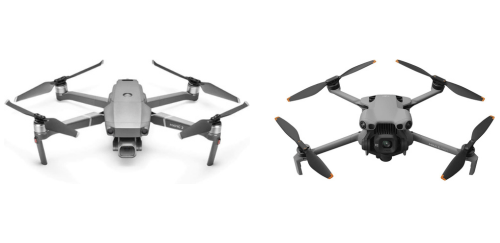
Why Do I Recommend The DJI Mavic 2 Pro?
- The DJI Mavic 2 Pro features a 1-inch 20 MP Hasselblad L1D-20c camera for more accurate color reproduction and professional-grade image processing in aerial photography, whereas the DJI Mini 5 Pro features a 1-inch Quad-Bayer camera sensor.
- DJI Mavic 2 Pro has an adjustable aperture range of f/2.8–f/11 for precise exposure control and the ability to manage depth of field and shutter speed in bright environments, while the DJI Mini 5 Pro uses a fixed aperture lens.
- It includes a 3850 mAh battery for stable power delivery and consistent flight performance during extended aerial shooting sessions, whereas the DJI Mini 5 Pro uses a 2788 mAh standard battery.
- The DJI Mavic 2 Pro comes with a 907 g airframe for increased stability during strong wind conditions and smoother aerial footage when flying at higher altitudes, while the DJI Mini 5 Pro has a 249.9 g lightweight body.
- DJI Mavic 2 Pro features larger propellers and a wider aircraft frame for improved aerodynamic stability during forward flight and better resistance to turbulence, whereas the DJI Mini 5 Pro uses a compact propeller system design.
- It supports an adjustable mechanical aperture camera system to maintain cinematic shutter speeds when recording video in bright daylight, whereas the DJI Mini 5 Pro uses a fixed-aperture camera system.
- The DJI Mavic 2 Pro includes a professional Hasselblad color profile for precise color calibration and consistent color science in aerial photography workflows, whereas the DJI Mini 5 Pro uses DJI’s standard imaging profile.
- DJI Mavic 2 Pro has 72 km/h flight speed for covering larger filming areas more quickly during aerial tracking or landscape filming, while the DJI Mini 5 Pro reaches about 64.8 km/h.
Maybe the DJI Mini 5 Pro can make you comfortable because it’s a little bit cheaper than the DJI Mavic 2 Pro. But you have to compromise all the above-mentioned features. Now the Decision is Yours. I hope it was helpful to choose the right one.
Side-by-Side Comparison
| Feature | DJI Mavic 2 Pro | DJI Mini 5 Pro |
| Camera Sensor Type | 1-inch CMOS Hasselblad L1D-20c | 1-inch CMOS Quad-Bayer |
| Adjustable Aperture | f/2.8 – f/11 | Fixed aperture |
| Battery Capacity | 3850 mAh | 2788 mAh |
| Transmission System | OcuSync 2.0 | O4+ |
| Max Flight Speed | 72 km/h | 18 m/s |
| Obstacle Sensing | Forward, backward, upward, downward, left, right vision sensors | Omnidirectional vision sensors + LiDAR |
| Gimbal Rotation Range | 3-axis mechanical gimbal | 3-axis gimbal with 225° roll rotation |
| Shooting Orientation | Horizontal only | Native vertical shooting |
| Tracking System | ActiveTrack 2.0 | ActiveTrack 360 |
| Charging Interface | Dedicated charger | USB-C charging |
| Max Horizontal Speed (Sport Mode) | 72 km/h | 64.8 km/h |
| Price | Check DJI Mavic 2 Pro Price | Check DJI Mini 5 Pro Price |
What Common Both Can Do?
- Foldable Drone Design: Both drones feature a foldable arm structure that allows the aircraft to become compact for transportation and storage. This design makes it easier for users to carry the drone in backpacks or small travel cases when flying in different locations.
- 3-Axis Mechanical Gimbal: Each drone uses a 3-axis mechanical stabilization system for the camera. This stabilizes footage during flight by compensating for drone movement and wind, producing smooth video and sharper photos.
- 4K Video Recording: Both drones support recording video in 4K resolution. This allows users to capture high-detail footage suitable for professional editing, content creation, and high-resolution playback.
- RAW Photo Capture: Both models support RAW image formats such as DNG. RAW files preserve more image data compared to compressed formats, giving photographers greater flexibility when adjusting exposure, color, and contrast during editing.
- HDR Photo Mode: Each drone includes HDR photography capabilities. HDR combines multiple exposures to balance bright and dark areas in the scene, which helps produce more detailed photos when shooting in challenging lighting conditions.
- GPS Positioning: Both drones use satellite positioning systems to maintain stable hovering and accurate location tracking. This improves flight safety and allows the drone to maintain its position even when the pilot releases the control sticks.
- Vision Positioning System: Each drone includes downward vision sensors that assist with stable hovering when GPS signals are weak or unavailable. These sensors help maintain altitude and position when flying indoors or close to the ground.
- Intelligent Flight Modes: Both drones support automated flight features designed to simplify complex camera movements. These modes allow users to capture cinematic shots without manually controlling every movement of the aircraft.
- ActiveTrack Subject Tracking: Each drone supports subject tracking technology that automatically follows a selected object or person. This feature is useful for capturing dynamic shots during activities such as biking, running, or moving vehicles.
- Waypoint Flight: Both drones include waypoint navigation functionality. Pilots can set predefined flight paths, allowing the drone to repeat the same route and camera movements for consistent aerial footage.
- Return-to-Home Function: Each drone includes an automatic return-to-home system. This feature directs the drone back to its takeoff point when the battery is low, signal is lost, or the pilot activates the command manually.
- QuickShots Automated Recording: Both drones provide QuickShots shooting modes that automatically perform preset flight patterns while recording video. These modes simplify capturing cinematic aerial shots such as circles, spirals, and rocket movements.
- DJI Fly App Compatibility: Both drones connect to DJI’s mobile control application. The app allows users to adjust camera settings, monitor flight data, update firmware, and manage flight features directly from a smartphone or controller.
- MicroSD Card Storage: Each drone supports removable microSD cards for storing photos and videos. This allows users to expand storage capacity and easily transfer captured media to computers or editing devices.
- Forward Obstacle Sensing: Both drones include sensors that detect obstacles in front of the aircraft during flight. This helps reduce the risk of collisions when navigating around buildings, trees, or other objects.
- Downward Sensors for Landing: Each drone uses downward sensors to assist with safe landing. These sensors help the drone detect the ground surface and stabilize the aircraft during the final descent.
- Panorama Shooting Modes: Both drones support automated panorama capture modes. These modes allow the camera to capture multiple images in sequence and stitch them together to create wide aerial panoramic photos.
Common Features
| Feature | DJI Mavic 2 Pro | DJI Mini 5 Pro |
| Foldable Drone Design | Yes | Yes |
| 3-Axis Mechanical Gimbal | Yes | Yes |
| 4K Video Recording | Yes | Yes |
| RAW Photo Capture | Yes | Yes |
| HDR Photo Mode | Yes | Yes |
| GPS Positioning | Yes | Yes |
| Vision Positioning System | Yes | Yes |
| Intelligent Flight Modes | Yes | Yes |
| ActiveTrack Subject Tracking | Yes | Yes |
| Waypoint Flight | Yes | Yes |
| Return-to-Home Function | Yes | Yes |
| QuickShots Automated Recording | Yes | Yes |
| DJI Fly App Compatibility | Yes | Yes |
| MicroSD Card Storage | Yes | Yes |
| Forward Obstacle Sensing | Yes | Yes |
| Downward Sensors for Landing | Yes | Yes |
| Panorama Shooting Modes | Yes | Yes |
| Price | Check DJI Mavic 2 Pro Price | Check DJI Mini 5 Pro Price |
FAQ
Which drone has the better camera sensor? Does the DJI Mini 5 Pro record higher frame-rate video than the DJI Mavic 2 Pro? Which drone is lighter and easier to carry? Do both drones support 4K video recording? Which drone has longer flight time? Do both drones support subject tracking features? Which drone has longer video transmission range? Do both drones support obstacle avoidance sensors? Can both drones capture RAW photos? Do both drones use a 3-axis camera gimbal? Which drone is better for travel and portability? Do both drones support intelligent flight modes? Which drone has more internal storage? Do both drones support microSD cards for storage? |