Beosound A5 & Beolit 20 share many similarities, but there are also important differences, such as quality, performance, features, design, and connectivity. If you want the best one between them, I Would recommend the Beosound A5 rather than the Beolit 20.
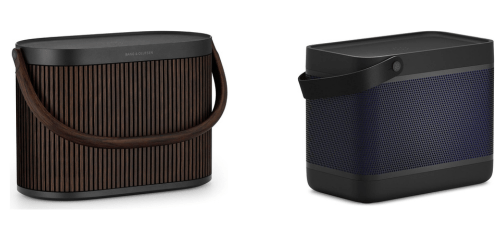
Why Do I Recommend The Beosound A5?
- The Beosound A5 features a 280 W amplifier system for higher volume output and stronger dynamic headroom in large indoor and outdoor spaces, whereas the Beolit 20 uses a 105 W amplifier system.
- Beosound A5 comes with Wi-Fi connectivity with AirPlay 2, Chromecast, and Spotify Connect for direct streaming without relying on a phone connection, while the Beolit 20 supports Bluetooth-only playback.
- It supports multiroom integration via the Mozart platform for synchronized audio across multiple rooms in a home setup, whereas the Beolit 20 does not include multiroom functionality.
- The Beosound A5 has a frequency response down to 32 Hz for deeper low-frequency reproduction and more pronounced sub-bass presence, while the Beolit 20 starts at 37 Hz.
- Beosound A5 includes a 4-driver active speaker system with a dedicated tweeter, midrange drivers, and woofer for more precise frequency separation and clearer audio detail, while the Beolit 20 uses full-range drivers with passive radiators.
- It features an IP65 rating for dust-tight protection and resistance against water jets during outdoor use, whereas the Beolit 20 has an IPX4 rating for splash resistance only.
- The Beosound A5 comes with a modular internal design with replaceable components for extended product lifespan and easier servicing, while the Beolit 20 uses a fixed internal construction.
- Beosound A5 has a maximum 101 dB SPL for maintaining clarity at higher listening volumes in open environments, while the Beolit 20 reaches 93 dB SPL.
Maybe the Beolit 20 can make you comfortable because it’s a little bit cheaper than the Beosound A5. But you have to compromise all the above-mentioned features. Now the Decision is Yours. I hope it was helpful to choose the right one.
Side-by-Side Comparison
| Feature | Beosound A5 | Beolit 20 |
| Total Amplifier Power | 280 W | 105 W |
| Woofer Size | 5.25″ | 5.5″ |
| Tweeter Size | 0.8″ | None |
| Full-Range Drivers | 2 × 2″ | 3 × 1.5″ |
| Frequency Range | 32–23,000 Hz | 37–20,000 Hz |
| Max SPL @1m | 101 dB | 93 dB |
| Bass Capability | 80 dB SPL | 77 dB SPL |
| Battery Capacity | 9,000 mAh | 3,200 mAh |
| Bluetooth Version | 5.2 | 4.2 |
| Wi-Fi | Wi-Fi 6 | None |
| Streaming Protocols | AirPlay 2, Chromecast, Spotify Connect, Tidal Connect | None |
| Multiroom Platform | Mozart platform | Not supported |
| Stereo Pairing Method | Wi-Fi / Mozart stereo pairing | Bluetooth stereo pairing |
| Water Resistance Rating | IP65 | IPX4 |
| DSP Features | Room Compensation, Adaptive Bass Linearization | Basic EQ only |
| Replaceable Components | Modular design | Fixed internal design |
| Build Materials | Aluminum + wood + fiber weave | Aluminum + polymer + leather |
| Connectivity Type | Wireless streaming + Bluetooth | Bluetooth only |
| Price | Check Beosound A5 Price | Check Beolit 20 Price |
What Common Both Can Do?
- Portable Speaker Design: Both speakers are built as portable units with integrated batteries and compact enclosures. This allows users to move them easily between rooms or take them outdoors without requiring a fixed power connection.
- Bluetooth Audio Streaming: Each model supports Bluetooth connectivity, enabling wireless playback from smartphones, tablets, and laptops. This ensures compatibility with a wide range of devices without relying on cables.
- Wireless Connectivity: Both speakers operate without the need for wired audio input as the primary method. This provides flexibility for placement and reduces cable clutter in indoor or outdoor setups.
- Built-in Battery: Each device includes an internal rechargeable battery for untethered operation. This allows consistent playback during travel, outdoor use, or in areas without direct power access.
- USB-C Charging: Both speakers use USB-C ports for charging, which supports modern charging standards and cable compatibility. This simplifies charging with widely available USB-C adapters and power banks.
- Qi Wireless Charging Top: Each model features a top surface capable of Qi wireless charging for compatible devices. This adds functionality by allowing users to charge smartphones while listening to audio.
- Stereo Pairing Support: Both speakers support pairing with another unit for stereo sound. This enhances channel separation and creates a wider soundstage for improved listening experiences.
- 360-Degree Sound Dispersion: Each speaker is designed to distribute sound evenly in all directions. This ensures consistent audio coverage regardless of listener position around the speaker.
- Aluminum Construction: Both models incorporate aluminum materials in their construction. This contributes to durability, structural rigidity, and a premium finish.
- Carry Handle/Strap: Each speaker includes a handle or strap for transport. This improves portability and makes it easier to carry during travel or outdoor use.
- App Control (B&O App): Both devices integrate with the Bang & Olufsen mobile app. This allows users to control playback settings, adjust sound profiles, and manage device updates.
- EQ Customization: Each speaker supports adjustable equalizer settings through the app. This enables users to fine-tune bass, mids, and treble according to personal preferences.
- Firmware Updates: Both speakers receive firmware updates via the app. This ensures continued feature improvements, bug fixes, and performance optimizations over time.
- Outdoor Usage Support: Each model is designed to function in outdoor environments. This includes construction choices and acoustic tuning suited for open-air listening conditions.
- Rechargeable Operation: Both speakers rely on rechargeable batteries rather than disposable power sources. This supports repeated use and reduces the need for frequent battery replacements.
- Bass Enhancement Technology: Each speaker uses internal tuning and acoustic design to enhance low-frequency output. This improves perceived bass depth even within compact enclosures.
- Multi-Driver Audio System: Both models include multiple drivers inside the enclosure. This allows separation of frequency ranges for more balanced sound reproduction.
- Premium Build Materials: Each speaker uses high-quality materials such as aluminum, polymers, and textiles. This contributes to durability, aesthetics, and long-term reliability.
Common Features
| Feature | Beosound A5 | Beolit 20 |
| Portable Speaker Design | Yes | Yes |
| Bluetooth Audio Streaming | Yes | Yes |
| Wireless Connectivity | Yes | Yes |
| Built-in Battery | Yes | Yes |
| USB-C Charging | Yes | Yes |
| Qi Wireless Charging Top | Yes | Yes |
| Stereo Pairing Support | Yes | Yes |
| 360-Degree Sound Dispersion | Yes | Yes |
| Aluminum Construction | Yes | Yes |
| Carry Handle/Strap | Yes | Yes |
| App Control (B&O App) | Yes | Yes |
| EQ Customization | Yes | Yes |
| Firmware Updates | Yes | Yes |
| Outdoor Usage Support | Yes | Yes |
| Rechargeable Operation | Yes | Yes |
| Bass Enhancement Technology | Yes | Yes |
| Multi-Driver Audio System | Yes | Yes |
| Premium Build Materials | Yes | Yes |
| Price | Check Beosound A5 Price | Check Beolit 20 Price |
FAQ
Which speaker has better sound performance? Does Beosound A5 support Wi-Fi streaming? Which model is more portable? How does battery life compare between the two? Which speaker has a larger battery capacity? Do both speakers support stereo pairing? Which speaker is more suitable for outdoor use? Can both speakers charge other devices wirelessly? Which speaker supports multiroom audio systems? Are both speakers compatible with the Bang & Olufsen app? What type of connectivity do both speakers use? How do the driver setups differ? Which speaker is designed for larger spaces? Do both speakers support USB-C charging? |