Beosound A1 3rd Gen & Bose SoundLink Flex share many similarities, but there are also important differences, such as quality, performance, features, design, and connectivity. If you want the best one between them, I Would recommend the Beosound A1 3rd Gen rather than the Bose SoundLink Flex.
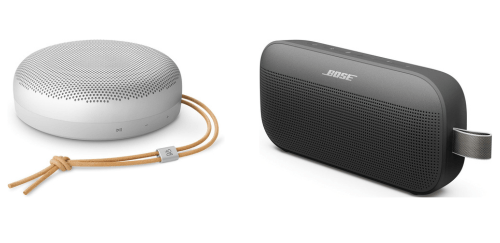
Why Do I Recommend The Beosound A1 3rd Gen?
- The Beosound A1 3rd Gen features true 360-degree sound dispersion for consistent audio coverage in all directions within a room or outdoor setting, whereas the Bose SoundLink Flex uses a front-facing speaker design.
- Beosound A1 3rd Gen comes with a dedicated woofer and tweeter configuration for clearer separation between bass and treble frequencies during music playback, while the Bose SoundLink Flex uses a single full-range driver.
- It supports USB-C wired audio input for stable, lossless playback from laptops or mobile devices without relying on Bluetooth, whereas the Bose SoundLink Flex does not support wired audio input.
- The Beosound A1 3rd Gen supports aptX Adaptive codec for higher-quality wireless audio streaming with reduced compression and improved synchronization, while the Bose SoundLink Flex uses standard SBC and AAC codecs.
- Beosound A1 3rd Gen has a 3-microphone array for clearer voice pickup and reduced background noise during calls or meetings, while the Bose SoundLink Flex uses a single microphone.
- It features a replaceable battery design for long-term usability and easier servicing over time, whereas the Bose SoundLink Flex uses a sealed non-replaceable battery.
- The Beosound A1 3rd Gen has an aluminum enclosure for improved structural rigidity and heat dissipation during prolonged playback sessions, while the Bose SoundLink Flex uses a silicone and steel construction.
- Beosound A1 3rd Gen has a 24-hour battery life for extended uninterrupted playback across multiple days of use, while the Bose SoundLink Flex has a 12-hour battery life.
Maybe the Bose SoundLink Flex can make you comfortable because it’s a little bit cheaper than the Beosound A1 3rd Gen. But you have to compromise all the above-mentioned features. Now the Decision is Yours. I hope it was helpful to choose the right one.
Side-by-Side Comparison
| Feature | Beosound A1 3rd Gen | Bose SoundLink Flex |
| Driver Configuration | 1 × 3.25″ woofer + 1 × 0.6″ tweeter | 1 × full-range driver |
| Amplification | 2 × 30 W Class D | Single amplifier |
| Frequency Range | 54 Hz – 20,000 Hz | ~64 Hz – 17,500 Hz |
| Max Sound Pressure Level | 92 dB SPL @1 m | Not specified |
| Battery Life | 24 hours | 12 hours |
| Battery Type | Replaceable lithium-ion | Integrated lithium-ion |
| Charging Time | 3 hours | ~4 hours |
| Codec Support | SBC, AAC, aptX Adaptive | SBC, AAC |
| Wired Audio Input | USB-C audio supported | No wired audio input |
| High-Frequency Extension | 18 kHz | 17.5 kHz |
| Sound Dispersion | 360° omnidirectional | Front-facing |
| Soundstage Score | 7.1 | 5.3 |
| Microphone System | 3-microphone array | Single microphone |
| Enclosure Material | Aluminum + polymer base | Silicone + powder-coated steel grille |
| App EQ Control | Custom EQ + presets | Basic EQ |
| Recommended Room Size | 5–30 m² | Not specified |
| Battery Serviceability | User-replaceable via service | Non-serviceable |
| Price | Check Beosound A1 3rd Gen Price | Check Bose SoundLink Flex Price |
What Common Both Can Do?
- Bluetooth Connectivity: Both speakers use Bluetooth technology to connect wirelessly to smartphones, tablets, and laptops. This allows users to stream audio without cables, making setup simple and convenient across different devices.
- Wireless Audio Streaming: Each model supports wireless playback from popular apps and media sources. This ensures flexibility for listening to music, podcasts, and videos without needing physical connections.
- Portable Design: Both speakers are designed for easy transport with compact form factors. This makes them suitable for travel, outdoor activities, and moving between rooms.
- Built-in Rechargeable Battery: Each speaker includes an internal battery that powers playback without requiring a constant power source. This enables true portability and use in locations without access to outlets.
- USB-C Charging: Both devices charge through a USB-C port, which provides a modern and widely compatible charging standard. This allows users to use the same cable for multiple devices, reducing clutter.
- Waterproof Rating: Both speakers carry an IP67 rating, meaning they are protected against dust and can withstand water immersion. This makes them suitable for use near pools, beaches, or in rainy conditions.
- Dustproof Design: Each model is sealed to prevent dust from entering internal components. This increases durability and reliability in outdoor or rugged environments.
- Speakerphone Function: Both speakers allow users to take calls directly through the device. This is useful for hands-free communication during work or while multitasking.
- Built-in Microphone: Each speaker includes a microphone to support voice calls. This ensures users can communicate clearly without switching devices.
- Multipoint Connection: Both models support connection to multiple devices at the same time. This allows users to switch between audio sources, such as a phone and a laptop, without reconnecting.
- Companion Mobile App: Each speaker works with a dedicated mobile app for control and customization. This enables users to adjust settings, manage connections, and personalize their listening experience.
- Firmware Updates: Both devices support software updates through their apps. This ensures ongoing improvements, bug fixes, and feature enhancements over time.
- Stereo Pairing: Each speaker can be paired with another unit of the same model for stereo sound. This enhances audio separation and creates a wider listening experience.
- Outdoor Usage Support: Both speakers are designed to function reliably in outdoor environments. Their durability and wireless capability make them suitable for travel, camping, and social gatherings.
- Compact Size: Each model is built with a relatively small footprint for easy storage and portability. This makes them convenient to carry in bags or backpacks.
- Loop/Strap Attachment: Both speakers include a built-in loop or strap for carrying or hanging. This allows users to attach them to bags, hooks, or outdoor gear.
- Wireless Range: Both devices typically support a Bluetooth range of around 10 meters. This allows users to move freely without losing connection to the audio source.
- Button Controls: Each speaker features onboard physical controls for playback and volume. This allows quick adjustments without needing to access a connected device.
Common Features
| Feature | Beosound A1 3rd Gen | Bose SoundLink Flex |
| Bluetooth Connectivity | Yes | Yes |
| Wireless Audio Streaming | Yes | Yes |
| Portable Design | Yes | Yes |
| Built-in Rechargeable Battery | Yes | Yes |
| USB-C Charging | Yes | Yes |
| Waterproof Rating | IP67 | IP67 |
| Dustproof Design | Yes | Yes |
| Speakerphone Function | Yes | Yes |
| Built-in Microphone | Yes | Yes |
| Multipoint Connection | Yes | Yes |
| Companion Mobile App | Yes | Yes |
| Firmware Updates | Yes | Yes |
| Stereo Pairing | Yes | Yes |
| Outdoor Usage Support | Yes | Yes |
| Compact Size | Yes | Yes |
| Loop/Strap Attachment | Yes | Yes |
| Wireless Range | ~10 m | ~10 m |
| Button Controls | Yes | Yes |
| Price | Check Beosound A1 3rd Gen Price | Check SoundLink Flex Price |
FAQ
Which speaker has better sound quality? Which speaker is louder? Does Beosound A1 3rd Gen support 360-degree sound? Which speaker has longer battery life? Can both speakers be used for phone calls? Which speaker is more durable for outdoor use? Are both speakers waterproof? Does the Bose SoundLink Flex float on water? Can you pair multiple speakers together? Do both speakers support Bluetooth multipoint connection? Is there any wired audio input option? Which speaker has better build quality? Do both speakers have companion apps? Which speaker is better for travel and portability? |