AirPods Pro 3 & AirPods Max share many similarities, but there are also important differences, such as quality, performance, features, design, and connectivity. If you want the best one between them, I Would recommend the AirPods Pro 3 rather than the AirPods Max.
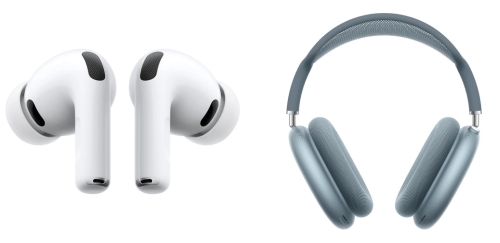
Why Do I Recommend The AirPods Pro 3?
- The AirPods Pro 3 includes adaptive in-ear ANC tuning for dynamically adjusting noise cancellation based on ear fit and surroundings, while the AirPods Max uses fixed over-ear ANC tuning without ear canal-based adaptation.
- AirPods Pro 3 features a compact true wireless in-ear design for easy pocket storage and on-the-go use during commuting or travel, whereas the AirPods Max uses a 384.8 g over-ear form factor that requires a bag for carrying.
- It comes with a charging case that supports USB-C, MagSafe, Qi, and Apple Watch chargers for flexible recharging across multiple devices and locations, while the AirPods Max uses only USB-C wired charging.
- The AirPods Pro 3 supports IPX4 water and sweat resistance for reliable use during workouts, outdoor runs, and humid conditions, whereas the AirPods Max has no official water resistance rating.
- AirPods Pro 3 includes a UWB-enabled charging case with precision finding and a built-in speaker for locating misplaced earbuds quickly, while the AirPods Max relies on standard Find My tracking without UWB precision.
- It features Bluetooth 5.3 connectivity for improved efficiency, lower latency, and more stable connections in crowded wireless environments, while the AirPods Max uses Bluetooth 5.0.
- The AirPods Pro 3 has a lightweight design at around 5.5 g per earbud for reduced ear fatigue during extended daily use, whereas the AirPods Max weighs 384.8 g which adds noticeable pressure during long sessions.
- AirPods Pro 3 features silicone ear tips in multiple sizes (XXS–L) for a customizable fit across different ear shapes, whereas the AirPods Max uses fixed-size memory foam ear cushions that do not provide the same level of fit variation.
Maybe the AirPods Max can make you comfortable because it’s a little bit cheaper than the AirPods Pro 3. But you have to compromise all the above-mentioned features. Now the Decision is Yours. I hope it was helpful to choose the right one.
Side-by-Side Comparison
| Feature | AirPods Pro 3 | AirPods Max |
| Chip | Apple H2 | Apple H1 |
| Water Resistance | IP57 | No IP rating |
| Form Factor | True wireless in-ear | Over-ear closed-back |
| Driver Size | ~10 mm class dynamic | 40 mm dynamic |
| Earbud Weight | 5.6 g | 384.8 g |
| Charging Case Weight | 44 g | 134.5 g |
| Battery (With Case) | Up to 30 hours | No extended battery |
| Charging Interface | USB-C + MagSafe + Qi + Apple Watch charger | USB-C wired only |
| Ear Tips / Cushions | Silicone tips | Memory foam ear cushions |
| Controls | Force sensor + touch gestures | Digital Crown + button |
| Case Type | Charging case with speaker + UWB | Passive Smart Case |
| UWB Precision Tracking | UWB chip | Not supported |
| Sensors | Heart rate sensor + motion sensors | Optical + position + accelerometer + gyroscope |
| Passive Isolation | In-ear seal | Over-ear acoustic seal |
| Codec Support | AAC, SBC | AAC |
| Price | Check AirPods Pro 3 Price | Check AirPods Max Price |
What Common Both Can Do?
- Active Noise Cancellation: Both models include active noise cancellation technology that continuously analyzes external sound and generates anti-noise signals. This helps reduce environmental noise so users can focus on music, calls, or media without distraction.
- Transparency Mode: Each device includes a transparency mode that allows outside sound to pass through the microphones into the audio stream. This makes it possible to stay aware of surroundings without removing the headphones or earbuds.
- Adaptive EQ: Both models use adaptive EQ to automatically tune audio based on ear shape and fit. This ensures consistent sound balance across different users and listening conditions.
- Personalized Spatial Audio: Both devices support personalized spatial audio that tailors sound positioning using ear geometry data. This creates a more immersive experience by placing audio elements around the listener in a 3D space.
- Dynamic Head Tracking: Each model includes head tracking sensors that adjust audio direction as the user moves their head. This maintains the position of sound sources relative to the screen for a more realistic experience.
- Apple Ecosystem Integration: Both products integrate tightly with Apple devices, enabling features like instant pairing and iCloud syncing. This allows seamless switching and consistent performance across iPhone, iPad, and Mac.
- Automatic Device Switching: Both support automatic switching between Apple devices linked to the same Apple ID. This eliminates the need to manually reconnect when changing between devices.
- Siri Voice Control: Each model supports hands-free Siri activation for controlling playback, calls, and system functions. This improves convenience by reducing the need for physical interaction.
- Find My Support: Both devices are compatible with Apple’s Find My network for locating misplaced headphones. This helps users track their devices through nearby Apple devices and location updates.
- Bluetooth Connectivity: Both rely on Bluetooth wireless connectivity for audio transmission and device pairing. This ensures compatibility with a wide range of Apple and non-Apple devices.
- AAC Audio Codec: Both models support the AAC codec for efficient wireless audio streaming. This provides consistent sound quality optimized for Apple devices.
- Microphone System: Each device includes multiple microphones for noise cancellation and voice pickup. This improves call clarity and enables advanced audio processing features.
- Skin Detection Sensors: Both models use sensors to detect when the headphones are being worn. This allows automatic play and pause functionality when the device is put on or removed.
- Motion Sensors: Both include accelerometers and gyroscopes to track movement and orientation. These sensors are essential for features like spatial audio and head tracking.
- Seamless Pairing (Apple ID sync): Both support instant pairing and syncing across devices using the same Apple ID. This simplifies setup and ensures a consistent user experience.
- Audio Sharing (Apple devices): Each model allows audio sharing between two sets of AirPods on a single Apple device. This makes it easy for multiple users to listen to the same content simultaneously.
- Firmware Updates (OTA): Both devices receive over-the-air firmware updates through connected Apple devices. This allows Apple to improve performance and add features over time.
- Voice Isolation / Call Processing: Both models include advanced voice processing features to enhance speech clarity during calls. This reduces background noise and improves communication quality.
Common Features
| Feature | AirPods Pro 3 | AirPods Max |
| Active Noise Cancellation | Yes | Yes |
| Transparency Mode | Yes | Yes |
| Adaptive EQ | Yes | Yes |
| Personalized Spatial Audio | Yes | Yes |
| Dynamic Head Tracking | Yes | Yes |
| Apple Ecosystem Integration | Yes | Yes |
| Automatic Device Switching | Yes | Yes |
| Siri Voice Control | Yes | Yes |
| Find My Support | Yes | Yes |
| Bluetooth Connectivity | Yes | Yes |
| AAC Audio Codec | Yes | Yes |
| Microphone System | Yes | Yes |
| Skin Detection Sensors | Yes | Yes |
| Motion Sensors | Yes | Yes |
| Seamless Pairing (Apple ID sync) | Yes | Yes |
| Audio Sharing (Apple devices) | Yes | Yes |
| Firmware Updates (OTA) | Yes | Yes |
| Voice Isolation / Call Processing | Yes | Yes |
| Price | Check AirPods Pro 3 Price | Check AirPods Max Price |