Beats Studio Pro & JBL Live 770NC share many similarities, but there are also important differences, such as quality, performance, features, design, and connectivity. If you want the best one between them, I Would recommend the Beats Studio Pro rather than the JBL Live 770NC.
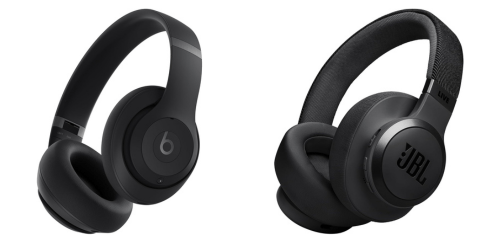
Why Do I Recommend The Beats Studio Pro?
- The Beats Studio Pro supports USB-C digital audio for lossless wired playback with lower signal degradation and improved clarity, while the JBL Live 770NC uses only 3.5 mm analog input.
- Beats Studio Pro features personalized spatial audio with dynamic head tracking for more accurate directional sound positioning during movies and music playback, whereas the JBL Live 770NC uses app-based spatial effects without head tracking.
- It includes a beamforming microphone system for clearer voice pickup and reduced background noise during calls, while the JBL Live 770NC uses a standard integrated microphone setup.
- The Beats Studio Pro has an aluminum-reinforced frame for increased structural durability and long-term wear resistance, while the JBL Live 770NC uses a full plastic construction.
- Beats Studio Pro comes with Apple ecosystem integration for seamless device switching, iCloud pairing, and native Siri access across Apple devices, while the JBL Live 770NC relies on standard Bluetooth pairing without deep ecosystem integration.
- It features real-time adaptive ANC processing at up to 48,000 adjustments per second for more consistent noise reduction in changing environments, whereas the JBL Live 770NC uses adaptive ANC without a specified processing rate.
- The Beats Studio Pro includes USB-C audio passthrough for direct connection to laptops and smartphones without requiring a DAC or adapter, while the JBL Live 770NC does not support digital audio over USB.
- Beats Studio Pro supports dedicated hardware-based spatial audio rendering for more consistent audio performance across apps and devices, while the JBL Live 770NC depends on software-based sound enhancements.
Maybe the JBL Live 770NC can make you comfortable because it’s a little bit cheaper than the Beats Studio Pro. But you have to compromise all the above-mentioned features. Now the Decision is Yours. I hope it was helpful to choose the right one.
Side-by-Side Comparison
| Feature | Beats Studio Pro | JBL Live 770NC |
| Wired Audio Input | USB-C + 3.5 mm | 3.5 mm |
| Digital Audio (USB) | Yes | No |
| Spatial Audio | Personalized Spatial Audio | App-based DSP spatial mode |
| Head Tracking | Yes | No |
| Noise Cancelling Type | Fully Adaptive ANC | True Adaptive ANC |
| Transparency Mode | Yes | Smart Ambient |
| Microphone System | Beamforming mic array | Integrated mic |
| Voice Assistant | Siri | Alexa, Google Assistant |
| App Support | Beats app | JBL Headphones app |
| Build Material | Aluminum + plastic | Plastic |
| Color Options | Black, Navy, Sandstone, Brown | Black, Blue |
| ANC Processing Rate | 48,000 times/sec | Not specified |
| Price | Check Beats Studio Pro Price | Check JBL Live 770NC Price |
What Common Both Can Do?
- Over-ear Design: Both headphones use an over-ear form factor that fully covers the ears for passive noise isolation and improved comfort. This design helps reduce external distractions and supports longer listening sessions.
- Closed-back Structure: Each model uses a closed-back construction that prevents sound leakage and blocks outside noise. This ensures more focused listening and better bass response.
- Active Noise Cancellation: Both headphones feature active noise cancellation technology to reduce external ambient sounds. This allows users to enjoy audio clearly in environments like travel or offices.
- Transparency / Ambient Mode: Each model includes a mode that lets external sounds pass through when needed. This helps users stay aware of surroundings without removing the headphones.
- Bluetooth Connectivity: Both devices connect wirelessly via Bluetooth for cable-free listening. This makes them compatible with smartphones, tablets, and laptops.
- Bluetooth Version: Each model uses Bluetooth 5.3, providing stable connections and efficient power usage. This improves connection reliability and reduces latency.
- Wireless Operation: Both headphones support fully wireless playback without needing cables. This enhances portability and convenience for everyday use.
- Wired Audio Support: Each model includes a 3.5 mm input for wired listening. This ensures usability even when the battery is low or for devices without Bluetooth.
- USB-C Charging: Both headphones charge using USB-C ports. This allows faster charging and compatibility with modern charging accessories.
- Fast Charging: Each model supports quick charging to provide hours of playback from a short charge time. This is useful for users needing immediate usage.
- Multipoint Connection: Both headphones support connecting to multiple devices simultaneously. This allows seamless switching between devices like phones and laptops.
- Built-in Microphone: Each device includes microphones for calls and voice commands. This enables hands-free communication and assistant access.
- Voice Assistant Support: Both models support voice assistants for commands and control. This allows users to perform tasks without manual interaction.
- Companion App Support: Each headphone can connect to a dedicated app for additional settings. This enables firmware updates and feature adjustments.
- 40 mm Drivers: Both headphones use 40 mm drivers for sound production. This size supports balanced audio performance across frequencies.
- Frequency Range: Each model covers a 20 Hz to 20 kHz frequency range. This range aligns with typical human hearing for full-spectrum audio playback.
- Foldable Design: Both headphones feature foldable structures for easier storage and portability. This makes them convenient for travel and carrying.
- On-ear Controls: Each model includes physical or touch controls on the earcups. This allows quick adjustments without needing a connected device.
- Rechargeable Battery: Both devices use built-in rechargeable batteries for wireless operation. This eliminates the need for disposable batteries.
- Stereo Sound Output: Each headphone provides stereo audio with left and right channel separation. This improves clarity and spatial perception in music and media.
Common Features
| Feature | Beats Studio Pro | JBL Live 770NC |
| Over-ear Design | Yes | Yes |
| Closed-back Structure | Yes | Yes |
| Active Noise Cancellation | Yes | Yes |
| Transparency / Ambient Mode | Yes | Yes |
| Bluetooth Connectivity | Yes | Yes |
| Bluetooth Version | 5.3 | 5.3 |
| Wireless Operation | Yes | Yes |
| Wired Audio Support | 3.5 mm | 3.5 mm |
| USB-C Charging | Yes | Yes |
| Fast Charging | Yes | Yes |
| Multipoint Connection | Yes | Yes |
| Built-in Microphone | Yes | Yes |
| Voice Assistant Support | Yes | Yes |
| Companion App Support | Yes | Yes |
| 40 mm Drivers | Yes | Yes |
| Frequency Range | 20 Hz – 20 kHz | 20 Hz – 20 kHz |
| Foldable Design | Yes | Yes |
| On-ear Controls | Yes | Yes |
| Rechargeable Battery | Yes | Yes |
| Stereo Sound Output | Yes | Yes |
| Price | Check Beats Studio Pro Price | Check JBL Live 770NC Price |
FAQ
Do Beats Studio Pro and JBL Live 770NC both support active noise cancellation? Which headphone has longer battery life between Beats Studio Pro and JBL Live 770NC? Do both headphones support wired listening? Are both headphones compatible with Bluetooth 5.3? Do Beats Studio Pro and JBL Live 770NC have transparency or ambient modes? Which model supports spatial audio features? Do both headphones support multiple device connections? Is there an equalizer available on both headphones? Do both headphones support voice assistants? Which headphone has better compatibility with Apple devices? Do both models include fast charging capability? Are both headphones foldable for portability? Do both headphones have built-in microphones for calls? Which headphone is lighter in weight? Do both headphones use the same driver size? |