Roborock Qrevo Curv & Dreame X40 Ultra share many similarities, but there are also important differences, such as quality, performance, features, design, and connectivity. If you want the best one between them, I Would recommend the Roborock Qrevo Curv rather than the Dreame X40 Ultra.
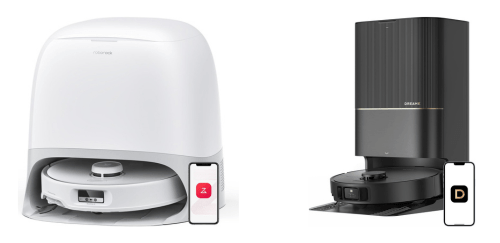
Why Do I Recommend The Roborock Qrevo Curv?
- The Roborock Qrevo Curv features 18,500 Pa HyperForce suction for stronger debris pickup from deep carpet fibers and heavy particles on hard floors, whereas the Dreame X40 uses 12,000 Pa suction.
- Roborock Qrevo Curv comes with an AdaptiLift adjustable chassis for climbing thresholds up to about 40 mm and maintaining stable traction over uneven surfaces, while the Dreame X40 uses a fixed chassis with about 22 mm obstacle clearance.
- It includes the DuoDivide split anti-tangle main brush for separating hair strands and preventing wraparound buildup during long cleaning cycles, whereas the Dreame X40 uses a TriCut brush system that relies on cutting blades to manage tangled hair.
- The Roborock Qrevo Curv features FlexiArm Arc edge cleaning technology for extending the side brush outward to reach along walls and corners more consistently during navigation, while the Dreame X40 uses a standard extendable side brush mechanism.
- Roborock Qrevo Curv comes with an ultra-slim 79.8 mm robot height for reaching under low furniture such as sofas and cabinets where taller robots cannot fit, whereas the Dreame X40 has a taller 97 mm body design.
- It includes mop washing with water heated to about 80 °C for dissolving sticky residues and oily stains more effectively during automatic dock cleaning cycles, while the Dreame X40 washes mop pads using water around 70 °C.
- The Roborock Qrevo Curv features a 62 dB quieter cleaning profile for reducing audible disturbance during night cleaning or work-from-home environments, while the Dreame X40 can reach about 76 dB in operation.
- Roborock Qrevo Curv supports 400 m² cleaning coverage per full charge for handling larger homes with fewer recharge interruptions, whereas the Dreame X40 typically covers around 300 m² in a single cleaning cycle.
Maybe the Dreame X40 Ultra can make you comfortable because it’s a little bit cheaper than the Roborock Qrevo Curv. But you have to compromise all the above-mentioned features. Now the Decision is Yours. I hope it was helpful to choose the right one.
Side-by-Side Comparison
| Feature | Roborock Qrevo Curv | Dreame X40 Ultra |
| Maximum suction power | 18,500 Pa | 12,000 Pa |
| Main brush system | DuoDivide split anti-tangle brush | TriCut anti-tangle cutting brush |
| Side brush design | FlexiArm Arc side brush | Extendable side brush |
| Chassis system | AdaptiLift adjustable chassis | Fixed chassis |
| Maximum obstacle crossing | 40 mm | 22 mm |
| Navigation hardware | LDS LiDAR | RGB camera + 3D structured light |
| Mop extension system | FlexiArm edge-mopping | MopExtend RoboSwing |
| Mop removal system | Mop lift only | Automatic mop detachment |
| Mop washing temperature | 80 °C | 70 °C |
| Robot dustbin capacity | 325 ml | 300 ml |
| Maximum runtime | 190 min | 180 min |
| Noise level | 62 dB | 76 dB |
| Robot height | 79.8 mm | ~97 mm |
| Cleaning coverage | 400 m² | ~300 m² |
| Side brush lift | Fixed | Liftable 10 mm |
| Dirt detection system | Reactive AI obstacle recognition | Multi-spectrum dirt detection |
| Dock washboard system | Standard dock tray | Self-cleaning washboard |
| Price | Check Roborock Qrevo Curv Price | Check Dreame X40 Ultra Price |
What Common Both Can Do?
- LiDAR navigation: Both robots use LiDAR sensors to scan the room and create precise maps of the home. This technology helps the robots navigate efficiently while avoiding random movement patterns during cleaning.
- AI obstacle avoidance: Each robot includes AI-based obstacle recognition to detect objects such as cables, shoes, or small furniture. This reduces the chance of the robot getting stuck and allows it to clean more consistently around obstacles.
- Automatic dust emptying dock: Both models include docking stations that automatically empty the robot’s dustbin into a sealed dust bag. This feature reduces the need for frequent manual maintenance and allows the robot to run for weeks without emptying.
- Dual spinning mop pads: Both devices use rotating mop pads instead of flat drag mops. Spinning mops apply friction to the floor surface, which helps remove dried stains and sticky residue more effectively.
- Mop lifting for carpets: Each robot automatically lifts its mop pads when a carpet is detected. This prevents carpets from becoming wet while still allowing the robot to vacuum them.
- Hot water mop washing: Both systems clean their mop pads using heated water inside the docking station. Hot water helps dissolve grease and stubborn dirt from the mop pads during automatic cleaning cycles.
- Hot air mop drying: Both docks include a drying function that uses warm air to dry mop pads after washing. Drying helps prevent bacteria growth and unpleasant odors.
- Automatic water tank refilling: Both models refill the robot’s internal water tank automatically from the dock. This enables longer mopping sessions without manual refilling.
- Multi-floor mapping: Both robots support saving maps for multiple floors in a house. Users can switch between different floor plans in the app without remapping each level.
- App control: Each robot connects to a smartphone app that allows users to control cleaning modes and customize cleaning areas. The app also provides mapping tools, scheduling, and maintenance alerts.
- Scheduled cleaning: Both robots allow users to create automatic cleaning schedules. This means the robot can start cleaning at specific times without manual intervention.
- Voice assistant support: Both models can integrate with voice assistants such as Amazon Alexa or Google Assistant. Users can start or stop cleaning using voice commands.
- Automatic room mapping: Both robots scan the home layout and automatically divide the map into rooms. This enables targeted cleaning of specific areas such as kitchens or living rooms.
- Recharge and resume cleaning: Both robots automatically return to their dock when the battery becomes low. After charging, they resume cleaning from the point where the previous session stopped.
- Carpet detection: Both robots detect carpet surfaces during cleaning. This allows the robots to adjust suction power or lift mop pads when necessary.
- Edge cleaning capability: Both devices include edge-focused cleaning features to reach corners and wall edges. This improves cleaning performance in areas that are often missed by round robots.
- Automatic mop washing in dock: Both docking stations wash the mop pads automatically after cleaning cycles. This helps maintain hygiene and ensures the robot starts the next session with clean mop pads.
- Obstacle detection sensors: Each robot uses multiple sensors to detect walls, furniture, and obstacles. These sensors help prevent collisions and improve navigation accuracy.
- Smart path planning: Both robots calculate efficient cleaning paths using mapping algorithms. This allows them to clean entire rooms methodically instead of moving randomly.
- Large battery capacity: Both robots use a 6,400 mAh lithium battery. This large battery capacity supports long cleaning sessions and coverage of larger homes without frequent charging.
Common Features
| Feature | Roborock Qrevo Curv | Dreame X40 Ultra |
| LiDAR navigation | Yes | Yes |
| AI obstacle avoidance | Yes | Yes |
| Automatic dust emptying dock | Yes | Yes |
| Dual spinning mop pads | Yes | Yes |
| Mop lifting for carpets | Yes | Yes |
| Hot water mop washing | Yes | Yes |
| Hot air mop drying | Yes | Yes |
| Automatic water tank refilling | Yes | Yes |
| Multi-floor mapping | Yes | Yes |
| App control | Yes | Yes |
| Scheduled cleaning | Yes | Yes |
| Voice assistant support | Yes | Yes |
| Automatic room mapping | Yes | Yes |
| Recharge and resume cleaning | Yes | Yes |
| Carpet detection | Yes | Yes |
| Edge cleaning capability | Yes | Yes |
| Automatic mop washing in dock | Yes | Yes |
| Obstacle detection sensors | Yes | Yes |
| Smart path planning | Yes | Yes |
| Large battery capacity | 6,400 mAh | 6,400 mAh |
| Price | Check Roborock Qrevo Curv Price | Check Dreame X40 Ultra Price |
FAQ
Which robot vacuum has stronger suction power? Do both robots support automatic mop washing and drying? Can both robots detect carpets and adjust cleaning automatically? Which robot is better for cleaning edges and corners? Do both robots support multi-floor mapping? What battery capacity do the Roborock Qrevo Curv and Dreame X40 use? Do both robots support automatic dustbin emptying? How do the navigation systems compare between the two models? Can the robots be controlled using a smartphone app? Do both robots support voice control with smart home assistants? Can the robots resume cleaning after charging? Are both robots capable of detecting obstacles during cleaning? Do both robots support scheduled cleaning routines? Are both robots suitable for large homes? |