Roborock Saros 10R & Roborock Qrevo Curv share many similarities, but there are also important differences, such as quality, performance, features, design, and connectivity. If you want the best one between them, I Would recommend the Roborock Saros 10R rather than the Roborock Qrevo Curv.
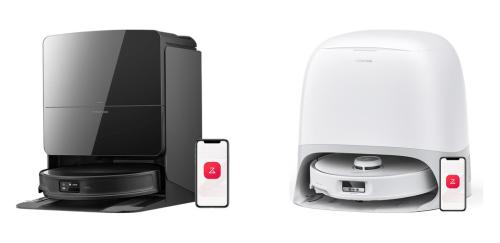
Why Do I Recommend The Roborock Saros 10R?
- The Roborock Saros 10R features 22,000 Pa HyperForce suction for stronger deep-carpet debris removal and improved pickup of embedded dust in rugs and floor gaps, whereas the Roborock Qrevo Curv uses an 18,500 Pa suction system.
- Roborock Saros 10R comes with a retractable LiDAR navigation module for a 79.8 mm ultra-low profile that allows the robot to clean under sofas, beds, and cabinets with limited clearance, while the Roborock Qrevo Curv uses a fixed LiDAR turret with a taller body design.
- It includes VertiBeam lateral obstacle-avoidance sensors for improved detection of small floor-level objects such as cables, toys, and furniture legs, whereas the Roborock Qrevo Curv relies primarily on a front RGB AI camera recognition system.
- The Roborock Saros 10R features the DuoDivide anti-tangle main brush system for separating and guiding hair toward the suction channel to reduce hair wrapping during long cleaning sessions, while the Roborock Qrevo Curv uses a dual rubber roller brush design.
- Roborock Saros 10R supports an extendable FlexiArm side brush for reaching edges and corners more effectively and sweeping debris toward the suction inlet, whereas the Roborock Qrevo Curv uses a standard fixed side brush.
- It comes with automatic mop pad removal at the dock to prevent wet mops from contacting carpets during vacuum-only cleaning cycles, while the Roborock Qrevo Curv keeps the mop pads attached to the robot.
- The Roborock Saros 10R includes an automatic detergent dispensing system for maintaining consistent cleaning solution mixing during mopping tasks, while the Roborock Qrevo Curv requires manual detergent addition.
- Roborock Saros 10R features fast charging technology that recharges the battery in approximately 150 minutes to resume cleaning tasks sooner in large homes, whereas the Roborock Qrevo Curv uses a longer charging cycle.
Maybe the Roborock Qrevo Curv can make you comfortable because it’s a little bit cheaper than the Roborock Saros 10R. But you have to compromise all the above-mentioned features. Now the Decision is Yours. I hope it was helpful to choose the right one.
Side-by-Side Comparison
| Feature | Roborock Saros 10R | Roborock Qrevo Curv |
| Maximum suction power | 22,000 Pa | 18,500 Pa |
| Navigation system | RetractSense LiDAR + VertiBeam lateral sensors | PreciSense LiDAR + RGB AI camera |
| Charging time | 150 min | ~240 min |
| Dock dust bag capacity | 2.7 L | 2.5 L |
| Dock clean water tank | 4 L | 3.2 L |
| Rated power | 66 W | 60 W |
| Mop washing temperature | 80 °C | 75 °C |
| Obstacle recognition objects | 108 object types | AI camera recognition system |
| Dock weight | 11.4 kg | ~10.5 kg |
| Price | Check Roborock Saros 10R Price | Check Roborock Qrevo Curv Price |
What Common Both Can Do?
- Robotic vacuum and mop functionality: Both models combine vacuuming and mopping capabilities in a single robotic system. This allows the robot to remove dry debris and wipe hard floors in the same cleaning cycle, reducing the need for separate devices.
- Dual rotating mop pads: Both robots use two spinning mop pads mounted underneath the device. The rotating motion applies consistent pressure on the floor, helping remove stains and sticky residue more effectively than static mopping systems.
- Automatic mop washing: Both products automatically wash the mop pads inside the dock during or after cleaning sessions. This process helps maintain hygiene by preventing dirt buildup on the mop pads during repeated cleaning cycles.
- Automatic mop drying: Each dock includes a drying system that removes moisture from the mop pads after washing. Drying the pads reduces odor formation and prevents bacterial growth between cleaning sessions.
- Self-emptying dock: Both models feature a dock that automatically transfers collected debris from the robot’s dustbin into a sealed dust bag. This reduces manual emptying frequency and supports longer periods of unattended cleaning.
- Automatic water tank refilling: Each system refills the robot’s onboard water tank from a larger dock reservoir. This allows the robot to continue mopping large floor areas without requiring frequent user intervention.
- Automatic dust collection: Both docking stations include a vacuum extraction system that pulls debris from the robot’s internal dustbin. This automation helps maintain suction efficiency while reducing maintenance tasks.
- Li-ion rechargeable battery: Both robots use lithium-ion batteries designed for high energy density and consistent power output. This battery technology supports stable cleaning performance and repeated recharge cycles.
- Smartphone app control: Each robot connects to a dedicated mobile app for remote management. The app allows users to start cleaning sessions, adjust suction levels, view maps, and configure cleaning zones.
- Multi-floor mapping: Both devices can store multiple floor maps within the software. This feature is useful for multi-level homes, enabling the robot to recognize layouts and clean different floors efficiently.
- No-go zone and virtual wall settings: Both robots allow users to define restricted areas through the app interface. This prevents the robot from entering spaces with delicate items, cables, or pet feeding areas.
- Carpet detection: Both models automatically recognize carpeted surfaces while cleaning. The robot adjusts its cleaning behavior when transitioning from hard floors to carpet.
- Automatic carpet boost suction: Each robot increases suction power when it detects carpet. This ensures better removal of dust and embedded debris from carpet fibers.
- Obstacle avoidance system: Both devices include sensors that help identify objects on the floor. This allows the robots to navigate around furniture legs, toys, and other obstacles during cleaning.
- Voice assistant compatibility: Both models integrate with voice assistant ecosystems such as smart speakers. Users can start or stop cleaning tasks using voice commands.
- Scheduled cleaning: Both robots support programmable cleaning schedules. This allows automated cleaning at specific times of day or days of the week without manual activation.
- Room-specific cleaning: Each system allows users to select individual rooms within the mapped layout. This enables targeted cleaning for high-traffic areas or specific parts of the home.
- Automatic return to dock: Both robots automatically return to the docking station when the cleaning cycle finishes or when the battery level becomes low. This ensures the device remains charged and ready for the next cleaning session.
Common Features
| Feature | Roborock Saros 10R | Roborock Qrevo Curv |
| Robotic vacuum and mop functionality | Yes | Yes |
| Dual rotating mop pads | Yes | Yes |
| Automatic mop washing | Yes | Yes |
| Automatic mop drying | Yes | Yes |
| Self-emptying dock | Yes | Yes |
| Automatic water tank refilling | Yes | Yes |
| Automatic dust collection | Yes | Yes |
| Li-ion rechargeable battery | Yes | Yes |
| Smartphone app control | Yes | Yes |
| Multi-floor mapping | Yes | Yes |
| No-go zone and virtual wall settings | Yes | Yes |
| Carpet detection | Yes | Yes |
| Automatic carpet boost suction | Yes | Yes |
| Obstacle avoidance system | Yes | Yes |
| Voice assistant compatibility | Yes | Yes |
| Scheduled cleaning | Yes | Yes |
| Room-specific cleaning | Yes | Yes |
| Automatic return to dock | Yes | Yes |
| Price | Check Roborock Saros 10R Price | Check Roborock Qrevo Curv Price |
FAQ
Which robot vacuum has stronger suction power, Roborock Saros 10R or Roborock Qrevo Curv? Does Roborock Saros 10R have a slimmer design than Roborock Qrevo Curv? Do both robots support vacuuming and mopping at the same time? Do Roborock Saros 10R and Roborock Qrevo Curv include a self-emptying dock? Can both robots automatically wash and dry their mop pads? Do Roborock Saros 10R and Roborock Qrevo Curv support multi-floor mapping? Are both models compatible with smartphone apps for remote control? Do both robots detect carpets automatically? Do these robot vacuums support voice assistant integration? How long can Roborock Saros 10R and Roborock Qrevo Curv run on a single charge? Can users set no-go zones and virtual boundaries on both robots? Do Roborock Saros 10R and Roborock Qrevo Curv automatically return to the dock after cleaning? Are both models capable of avoiding obstacles during cleaning? Which robot vacuum is better for large homes, Roborock Saros 10R or Roborock Qrevo Curv? |