DJI Avata Pro and DJI Avata 2 share many similarities, but there are also important differences, such as quality, performance, features, design, and connectivity. If you want the best one between them, I Would recommend the DJI Avata Pro rather than the DJI Avata 2.
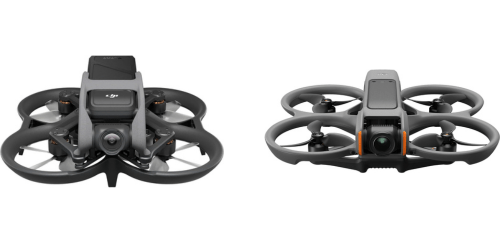
Why Do I Recommend The DJI Avata Pro?
- The DJI Avata Pro includes DJI O3+ video transmission for stable real-time FPV video feed during high-speed flight and obstacle navigation, whereas the DJI Avata 2 uses DJI O4 transmission.
- DJI Avata Pro features Motion Controller 2 compatibility for gesture-based drone control using the earlier DJI motion controller ecosystem, whereas the DJI Avata 2 supports Motion Controller 3.
- It comes with FPV Remote Controller 2 compatibility for pilots who already use DJI FPV ecosystem controllers without upgrading hardware, while the DJI Avata 2 supports FPV Remote Controller 3.
- The DJI Avata Pro comes with a 2420 mAh battery for extended power availability during continuous FPV flying sessions, whereas the DJI Avata 2 uses a 2150 mAh battery.
- DJI Avata Pro features a 48 MP camera sensor for capturing higher-resolution still images with greater pixel detail during aerial photography, while the DJI Avata 2 uses a 12 MP camera sensor.
- It includes a 14.76 V battery system for consistent power output during rapid throttle adjustments and aggressive FPV maneuvers, while the DJI Avata 2 uses a 14.54 V battery system.
- The DJI Avata Pro supports microSD recording alongside 20 GB internal storage for flexible onboard video storage options during extended FPV recording sessions, while the DJI Avata 2 includes 46 GB internal storage.
- DJI Avata Pro supports −10°C to 40°C operating temperature for reliable drone operation in colder outdoor environments, whereas the DJI Avata 2 operates within a 0°C to 40°C temperature range.
Maybe the DJI Avata 2 can make you comfortable because it’s a little bit cheaper than the DJI Avata Pro. But you have to compromise all the above-mentioned features. Now the Decision is Yours. I hope it was helpful to choose the right one.
Side-by-Side Comparison
| Feature | DJI Avata Pro | DJI Avata 2 |
| Camera Sensor | 1/1.7-inch CMOS | 1/1.3-inch CMOS |
| Effective Pixels | 48 MP | 12 MP |
| Operating Temperature | −10°C to 40°C | 0°C to 40°C |
| Battery Capacity | 2420 mAh | 2150 mAh |
| Battery Voltage | 14.76 V | 14.54 V |
| Charging Method | Standard charging hub | USB-C PD fast charging |
| Compatible Motion Controller | Motion Controller 2 | Motion Controller 3 |
| Compatible FPV Remote | FPV Remote Controller 2 | FPV Remote Controller 3 |
| Price | Check DJI Avata Pro Price | Check DJI Avata 2 Price |
What Common Both Can Do?
- 4K Video Recording: Both drones support 4K video recording, allowing pilots to capture high-resolution footage suitable for cinematic content and professional editing workflows. This resolution preserves fine detail and provides flexibility for cropping or stabilization in post-production.
- Ultra-Wide Field of View Camera: Each drone uses a wide-angle camera design to capture immersive first-person-view footage. This field of view helps convey speed and motion during FPV flights and improves situational awareness while flying.
- RockSteady Electronic Image Stabilization: Both drones include RockSteady stabilization technology to reduce camera shake during aggressive flight maneuvers. This ensures smoother footage even when flying quickly or performing sharp turns.
- HorizonSteady Stabilization: Both models support HorizonSteady technology to maintain a level horizon in recorded footage. This feature helps produce professional-looking videos by preventing tilted horizons when the drone banks or rolls.
- Integrated Propeller Guards: Each drone features built-in propeller guards around the rotors. These guards provide protection during indoor flights or tight-space maneuvers by reducing the risk of damage from collisions.
- FPV Drone Design: Both drones use a dedicated first-person-view design intended for immersive flight experiences. This structure prioritizes agility and camera perspective rather than traditional aerial photography layouts.
- MicroSD Card Support: Both drones support microSD cards for external storage. This allows pilots to store large amounts of video footage without relying entirely on internal storage.
- Built-in Internal Storage: Each drone includes internal storage for recording video even when a microSD card is not installed. This feature ensures that pilots can still capture footage during unexpected situations.
- Manual Flight Mode: Both drones support manual flight mode for experienced pilots who want full control of throttle, pitch, roll, and yaw. This mode allows advanced maneuvers and FPV racing-style flying.
- Normal Flight Mode: Each drone includes a normal flight mode that balances speed and stability. This mode is designed for everyday flying and provides smooth control for most users.
- Sport Flight Mode: Both models feature a sport mode that increases responsiveness and maximum speed. This allows pilots to perform faster flights while still maintaining assisted stabilization.
- GPS / GNSS Positioning: Both drones use satellite positioning systems to maintain stable hovering and accurate location tracking. This technology improves flight safety and helps maintain precise positioning outdoors.
- Downward Vision Positioning System: Each drone includes downward-facing sensors to assist with stable hovering close to the ground. These sensors improve stability when GPS signals are weak or unavailable.
- Emergency Brake Feature: Both drones support an emergency braking function that quickly stops forward motion. This feature helps pilots avoid obstacles during sudden situations or unexpected flight paths.
- Compatible With DJI Goggles: Both drones are designed to work with DJI FPV goggles for immersive first-person flight. Goggles allow pilots to see the drone’s camera feed in real time with minimal latency.
- Compatible With Motion Controller: Each drone supports DJI motion controllers that translate hand movements into flight commands. This control method makes FPV flying more intuitive for beginners.
- 2.4 GHz Transmission Support: Both drones operate on the 2.4 GHz frequency band for wireless communication. This band provides reliable signal transmission in many environments.
- 5.8 GHz Transmission Support: Both drones also support the 5.8 GHz frequency band. This allows pilots to switch to a less crowded signal channel in areas with heavy wireless interference.
Common Features
| Feature | DJI Avata Pro | DJI Avata 2 |
| 4K Video Recording | Yes | Yes |
| Ultra-Wide Field of View Camera | Yes | Yes |
| RockSteady Electronic Image Stabilization | Yes | Yes |
| HorizonSteady Stabilization | Yes | Yes |
| Integrated Propeller Guards | Yes | Yes |
| FPV Drone Design | Yes | Yes |
| MicroSD Card Support | Yes | Yes |
| Built-in Internal Storage | Yes | Yes |
| Manual Flight Mode | Yes | Yes |
| Normal Flight Mode | Yes | Yes |
| Sport Flight Mode | Yes | Yes |
| GPS / GNSS Positioning | Yes | Yes |
| Downward Vision Positioning System | Yes | Yes |
| Emergency Brake Feature | Yes | Yes |
| Compatible With DJI Goggles | Yes | Yes |
| Compatible With Motion Controller | Yes | Yes |
| 2.4 GHz Transmission Support | Yes | Yes |
| 5.8 GHz Transmission Support | Yes | Yes |
| Price | Check DJI Avata Pro Price | Check DJI Avata 2 Price |
FAQ
Which drone has a better camera between DJI Avata Pro and DJI Avata 2? Does DJI Avata 2 record higher frame-rate video than DJI Avata Pro? Which drone has longer flight time, DJI Avata Pro or DJI Avata 2? Does DJI Avata 2 have a newer transmission system than DJI Avata Pro? Which drone is lighter between DJI Avata Pro and DJI Avata 2? Do both drones support FPV goggles? Can both DJI Avata Pro and DJI Avata 2 use motion controllers? Do DJI Avata Pro and DJI Avata 2 have built-in storage? Do both drones support microSD cards? Are DJI Avata Pro and DJI Avata 2 suitable for beginners? Do both drones include propeller guards? Which drone has more built-in storage, DJI Avata Pro or DJI Avata 2? Do both drones support multiple flight modes? Which drone is newer, DJI Avata Pro or DJI Avata 2? |