HOVERAir X1 Pro & DJI Neo share many similarities, but there are also important differences, such as quality, performance, features, design, and connectivity. If you want the best one between them, I Would recommend the HOVERAir X1 Pro rather than the DJI Neo.
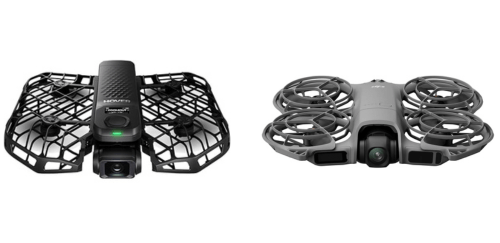
Why Do I Recommend The HOVERAir X1 Pro?
- The HoverAir X1 Pro features 4K video recording at 60fps for capturing smoother motion and more fluid action footage during fast activities like running or cycling, whereas the DJI Neo features 4K video recording at 30fps.
- HoverAir X1 Pro supports up to 1TB microSD card for storing longer video sessions and large 4K files without quickly running out of space, while the DJI Neo uses internal storage only.
- It comes with a 2-axis mechanical gimbal combined with electronic stabilization for maintaining steadier footage during movement and directional changes, whereas the DJI Neo uses a single-axis stabilization system with electronic stabilization.
- The HoverAir X1 Pro has a 1920mAh battery capacity for providing stable power output during extended autonomous tracking and cinematic flight modes, while the DJI Neo uses a 1435mAh battery.
- HoverAir X1 Pro supports 48MP photo capture for capturing higher-resolution aerial photos with finer detail and improved cropping flexibility, while the DJI Neo supports 12MP photo capture.
- It features microSD-expandable storage and 32GB internal memory for handling high-bitrate video recording and longer travel shoots without frequent file transfers, whereas the DJI Neo includes 22GB internal storage without expansion.
- The HoverAir X1 Pro supports vertical video recording modes such as 2.7K vertical capture for creating social-media-ready content directly from the drone, while the DJI Neo records standard horizontal video formats only.
- HoverAir X1 Pro supports operation in temperatures down to −20 °C for maintaining functionality during winter filming or cold outdoor conditions, while the DJI Neo supports operating temperatures starting around −10 °C.
Maybe the DJI Neo can make you comfortable because it’s a little bit cheaper than the HOVERAir X1 Pro. But you have to compromise all the above-mentioned features. Now the Decision is Yours. I hope it was helpful to choose the right one.
Side-by-Side Comparison
| Feature | HOVERAir X1 Pro | DJI Neo |
| Foldable Design | Foldable frame | Fixed frame |
| Video Resolution (Max) | 4K 60 fps | 4K 30 fps |
| Vertical Video | 2.7K 60 fps | Not supported |
| Photo Resolution | 12 MP / 48 MP | 12 MP |
| Stabilization | 2-axis gimbal + EIS | 1-axis gimbal + EIS |
| Internal Storage | 32 GB | 22 GB |
| microSD Support | microSD up to 1 TB | No microSD slot |
| Battery Capacity | 1920 mAh | 1435 mAh |
| Maximum Wind Resistance | 10.7 m/s | 8 m/s |
| Maximum Speed | 60 km/h | 16 m/s |
| Operating Temperature | −20 °C to 40 °C | −10 °C to 40 °C |
| Propeller Guard Design | Foldable cage frame | Integrated rigid guard |
| Camera Bitrate | 160 Mbps | Not specified |
| Price | Check HOVERAir X1 Pro Price | Check DJI Neo Price |
Common Features
| Feature | HOVERAir X1 Pro | DJI Neo |
| Palm Launch | Yes | Yes |
| Palm Landing | Yes | Yes |
| 4K Video Recording | 4K UHD | 4K UHD |
| Electronic Image Stabilization | Yes | Yes |
| AI Subject Tracking | Yes | Yes |
| Automated Flight Modes | Yes | Yes |
| Mobile App Control | Yes | Yes |
| Wi-Fi Connectivity | Yes | Yes |
| Built-in Camera | Yes | Yes |
| 12 MP Photo Capture | 12 MP | 12 MP |
| Downward Vision Sensors | Yes | Yes |
| Enclosed Propeller Guards | Yes | Yes |
| One-Button Flight Modes | Yes | Yes |
| Auto Return to Home / Landing | Yes | Yes |
| Rechargeable Lithium Battery | Yes | Yes |
| Compact Selfie Drone Category | Yes | Yes |
| Price | Check HOVERAir X1 Pro Price | Check DJI Neo Price |