Arris SURFboard T25 & NETGEAR CM1150V share many similarities, but there are also important differences, such as quality, performance, features, design, and connectivity. If you want the best one between them, I Would recommend the Arris SURFboard T25 rather than the NETGEAR CM1150V.
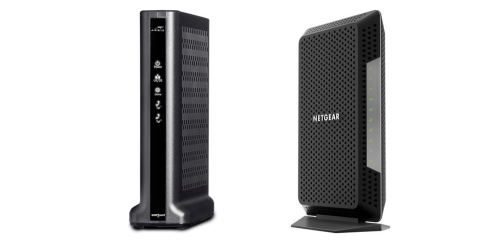
Why Do I Recommend The Arris SURFboard T25?
- The Arris T25 features a 2.5GbE Ethernet port for connecting to a multi-gig router WAN and fully utilizing internet plans above 1Gbps, while the Netgear CM1150V uses 1GbE Ethernet ports.
- Arris T25 has a 2.5Gbps single-port LAN speed to deliver higher wired throughput to a compatible router without combining ports, whereas the Netgear CM1150V has a 1.0Gbps maximum per Ethernet port.
- It comes with one dedicated multi-gig port to provide a direct high-bandwidth link without configuration steps, while the Netgear CM1150V supports link aggregation that requires a compatible router and manual setup.
- The Arris T25 includes a dual-port layout with one 2.5GbE and one 1GbE port for flexible high-speed and standard device connections, while the Netgear CM1150V includes four 1GbE ports only.
- Arris T25 supports a 2.5GbE WAN handoff to reduce the risk of LAN-side bottlenecks on high-tier cable plans, whereas the Netgear CM1150V supports only 1GbE per physical port.
- It features a multi-gig Ethernet interface to match newer Wi-Fi 6 and Wi-Fi 7 routers with 2.5GbE WAN ports, while the Netgear CM1150V uses standard gigabit Ethernet interfaces.
- The Arris T25 has a simplified high-speed connection path to ensure a single wired device or router can access speeds above 1Gbps without port bonding, whereas the Netgear CM1150V uses link aggregation to combine two 1GbE ports for higher total throughput.
- Arris T25 includes a 2.5GbE RJ-45 port to provide higher headroom for future ISP speed upgrades beyond 1Gbps, while the Netgear CM1150V includes only 1GbE RJ-45 ports.
Maybe the NETGEAR CM1150V can make you comfortable because it’s a little bit cheaper than the Arris SURFboard T25. But you have to compromise all the above-mentioned features. Now the Decision is Yours. I hope it was helpful to choose the right one.
Side-by-Side Comparison
| Feature | Arris SURFboard T25 | NETGEAR CM1150V |
| Multi-Gig Ethernet | 1 × 2.5GbE | None |
| 1GbE Ethernet | 1 × 1GbE | 4 × 1GbE |
| Max LAN port rate (single port) | 2.5Gbps | 1.0Gbps |
| Max total LAN ports usable without switch | 2 | 4 |
| Intended LAN topology | 2-port LAN | 4-port LAN |
| LAN-side multi-gig router compatibility | 2.5GbE WAN supported | 1GbE WAN |
| Multi-Gig Ethernet | 1 × 2.5GbE | None |
| 2.5GbE port count | 1 | 0 |
| Dimensions (approx) | 6.1 x 4.1 x 1.5 inches | 5.6 x 4.3 x 1.6 inches |
| LED Indicators Count | 8 | 5 |
| Price | Check Arris SURFboard T25 Price | Check NETGEAR CM1150V Price |
What Common Both Can Do?
- DOCSIS Standard: Both models use DOCSIS 3.1 technology, which supports gigabit-class cable internet plans. This ensures compatibility with modern cable ISP infrastructures and allows access to higher bandwidth tiers where available.
- DOCSIS 3.0 Downstream Channels: Each modem supports 32 downstream channels under DOCSIS 3.0 mode. This allows stable performance in areas where ISPs still rely on DOCSIS 3.0 channel bonding.
- DOCSIS 3.0 Upstream Channels: Both devices support 8 upstream channels in DOCSIS 3.0 mode. This helps maintain consistent upload performance for video calls, cloud backups, and file sharing.
- OFDM Downstream Channel: Both include 1 OFDM downstream channel for DOCSIS 3.1 operation. This improves spectral efficiency and enables higher data throughput over cable networks.
- OFDMA Upstream Channels: Each modem supports 2 OFDMA upstream channels. This allows improved upstream efficiency and better handling of multiple connected devices transmitting data simultaneously.
- Backward Compatibility: Both are backward compatible with DOCSIS 3.0 networks. This ensures they can function even if a service area has not fully transitioned to DOCSIS 3.1.
- Voice Ports: Both units include two RJ-11 telephone ports. This allows support for Xfinity Voice or similar cable-based phone services.
- Voice Technology: Each modem uses PacketCable 2.0 for digital voice services. This ensures compatibility with modern cable telephony standards.
- Coaxial Input: Both use a standard F-type coaxial connector. This makes installation straightforward with typical residential cable wiring.
- Ethernet Interface: Each modem uses RJ-45 Ethernet connections for wired networking. This ensures compatibility with standard routers and wired network devices.
- Wi-Fi Built-In: Neither device includes built-in Wi-Fi functionality. This means both require a separate router for wireless connectivity.
- Integrated Router: Both models function strictly as cable modems and not as modem-router combos. This allows users to pair them with a router of their choice.
- MoCA Support: Neither model includes integrated MoCA networking. This means coax-based internal networking would require separate MoCA adapters.
- USB Port: Both devices do not include USB connectivity. Their primary networking interface is Ethernet.
- IPv6 Support: Each modem supports IPv6 addressing. This ensures compatibility with modern internet protocols and future network expansion.
- ISP Compatibility Type: Both are designed specifically for cable ISPs. They are not compatible with DSL, fiber ONT, or satellite internet connections.
- Standalone Cable Modem: Both operate as standalone cable modems without additional wireless or routing features. This makes them suitable for users who prefer a separate router setup.
- LED Status Indicators: Each unit includes front-panel LED indicators for power, downstream, upstream, and online status. This helps users quickly diagnose connection or signal issues.
Common Features
| Feature | Arris SURFboard T25 | NETGEAR CM1150V |
| DOCSIS Standard | DOCSIS 3.1 | DOCSIS 3.1 |
| DOCSIS 3.0 Downstream Channels | 32 | 32 |
| DOCSIS 3.0 Upstream Channels | 8 | 8 |
| OFDM Downstream Channel | 1 | 1 |
| OFDMA Upstream Channels | 2 | 2 |
| Backward Compatibility | DOCSIS 3.0 | DOCSIS 3.0 |
| Voice Ports | 2 × RJ-11 | 2 × RJ-11 |
| Voice Technology | PacketCable 2.0 | PacketCable 2.0 |
| Coaxial Input | 1 × F-type | 1 × F-type |
| Ethernet Interface | RJ-45 | RJ-45 |
| Wi-Fi Built-In | No | No |
| Integrated Router | No | No |
| MoCA Support | No | No |
| USB Port | No | No |
| IPv6 Support | Yes | Yes |
| ISP Compatibility Type | Cable ISP | Cable ISP |
| Standalone Cable Modem | Yes | Yes |
| LED Status Indicators | Yes | Yes |
| Price | Check Arris SURFboard T25 Price | Check NETGEAR CM1150V Price |