Netgear AX11000 & NETGEAR AX6000 share many similarities, but there are also important differences, such as quality, performance, features, design, and connectivity. If you want the best one between them, I Would recommend the Netgear AX11000 rather than the NETGEAR AX6000.
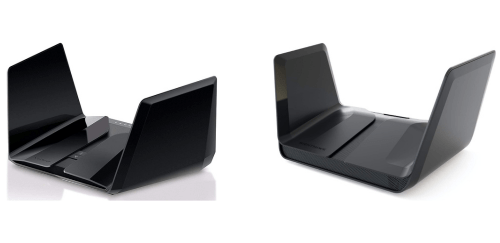
Why Do I Recommend The Netgear AX11000?
- The NETGEAR AX11000 features a tri-band Wi-Fi design with one 2.4GHz band and two separate 5GHz bands for distributing high-bandwidth traffic across multiple channels and reducing congestion during simultaneous gaming and streaming sessions, while the NETGEAR AX6000 uses a dual-band configuration with one 2.4GHz band and one 5GHz band.
- NETGEAR AX11000 supports up to 10.8Gbps wireless throughput for handling more concurrent high-speed connections such as 4K streaming, large file transfers, and online gaming without saturation, whereas the NETGEAR AX6000 supports up to 6.0Gbps total throughput.
- It includes two independent 5GHz radios for separating gaming devices and streaming devices onto different high-speed bands to maintain consistent latency and throughput, while the NETGEAR AX6000 includes a single 5GHz radio.
- The NETGEAR AX11000 features an aggregate 5GHz bandwidth of 9.6Gbps across two 4×4 radios for distributing heavy wireless loads across multiple client groups, while the NETGEAR AX6000 has a single 4.8Gbps 5GHz radio.
- NETGEAR AX11000 comes with configurable LAN and WAN link aggregation options for combining two Gigabit Ethernet ports to increase wired throughput to compatible NAS systems or internet connections, whereas the NETGEAR AX6000 supports dual-port aggregation with fewer configuration combinations.
- It has 12 Wi-Fi streams distributed across three bands for assigning separate spatial streams to multiple device categories simultaneously, while the NETGEAR AX6000 has 8 spatial streams concentrated on the 5GHz band and 4 on the 2.4GHz band within a dual-band layout.
- The NETGEAR AX11000 features a dedicated additional 5GHz channel set for isolating latency-sensitive devices such as gaming consoles from general household traffic to maintain stable ping times under heavy usage, while the NETGEAR AX6000 relies on a single shared 5GHz channel group.
- NETGEAR AX11000 includes a 2.5Gbps Multi-Gig Ethernet port combined with tri-band wireless distribution to balance high-speed wired and wireless workloads across more independent data paths, while the NETGEAR AX6000 includes a 5Gbps Multi-Gig port but operates within a dual-band wireless architecture.
Maybe the NETGEAR AX6000 can make you comfortable because it’s a little bit cheaper than the Netgear AX11000. But you have to compromise all the above-mentioned features. Now the Decision is Yours. I hope it was helpful to choose the right one.
Side-by-Side Comparison
| Feature | Netgear AX11000 | NETGEAR AX6000 |
| Wi-Fi class | AX11000 | AX6000 |
| Wi-Fi bands | Tri-band | Dual-band |
| Radio layout | 2.4GHz + 5GHz-1 + 5GHz-2 | 2.4GHz + 5GHz |
| Max combined Wi-Fi rate | 10.8 Gbps | 6.0 Gbps |
| 5GHz radio count | 2 | 1 |
| 5GHz PHY config | 4×4 + 4×4 | 8×8 |
| 5GHz max rate (aggregate) | 9.6 Gbps | 4.8 Gbps |
| 2.4GHz PHY config | 4×4 | 4×4 |
| Memory (flash / RAM) | 512MB NAND flash / 1GB DDR3 SDRAM | Not specified in datasheet |
| Link aggregation | 2x GbE LAN + 2x GbE WAN | Dual GbE port aggregation |
| Price | Check Netgear AX11000 Price | Check NETGEAR AX6000 Price |
What Common Both Can Do?
- Wi-Fi 6 (802.11ax): Both routers support the Wi-Fi 6 standard, enabling higher efficiency, improved capacity, and reduced latency in dense network environments. This ensures better performance when multiple devices are connected simultaneously.
- Backward Compatibility (802.11a/b/g/n/ac): Each model works with older Wi-Fi standards, allowing legacy devices to connect without compatibility issues. This protects existing hardware investments while upgrading to Wi-Fi 6.
- 2.4GHz Band Support: Both routers provide 2.4GHz connectivity for extended range and compatibility with IoT devices. This band is commonly used for smart home products and low-bandwidth devices.
- 5GHz Band Support: Each router includes 5GHz connectivity for higher throughput and lower interference. This band is preferred for streaming, gaming, and high-speed file transfers.
- OFDMA: Both models use Orthogonal Frequency Division Multiple Access technology to divide channels into sub-channels. This improves efficiency when many devices share the same network.
- MU-MIMO: Both routers support Multi-User Multiple Input Multiple Output for simultaneous data streams to multiple devices. This reduces waiting time and improves overall throughput in multi-device households.
- Beamforming+: Each device uses beamforming technology to focus wireless signals directly toward connected clients. This enhances signal strength and stability across the coverage area.
- 160MHz Channel Width: Both models support 160MHz channels for higher data rates on compatible devices. This benefits high-bandwidth applications such as 4K streaming and large file transfers.
- WPA3 Security: Each router includes WPA3 encryption for stronger authentication and enhanced protection against brute-force attacks. This increases overall network security.
- WPA2-PSK Support: Both routers maintain WPA2 compatibility for devices that do not yet support WPA3. This ensures secure connections across mixed device environments.
- 1x Gigabit WAN Port: Each router includes a dedicated Gigabit WAN port for high-speed internet connections. This supports broadband plans up to 1Gbps.
- 4x Gigabit LAN Ports: Both models feature four Gigabit LAN ports for wired devices. This allows stable, low-latency connections for gaming consoles, PCs, and NAS units.
- Multi-Gig Ethernet Port: Each router includes a high-speed Multi-Gig port for faster wired networking beyond standard Gigabit speeds. This supports advanced home networking setups.
- Link Aggregation: Both devices support Ethernet port aggregation for increased wired throughput or redundancy. This is useful for NAS systems and high-bandwidth wired workloads.
- USB 3.0 Ports: Each router includes two USB 3.0 ports for external storage or printer sharing. This enables local network file access and media streaming.
- Nighthawk App Support: Both routers are managed through the Nighthawk mobile app for setup, monitoring, and configuration. This simplifies network management from smartphones.
- Alexa Voice Control: Each model integrates with Amazon Alexa for voice-based network commands. This allows hands-free control of certain router functions.
- Smart Connect: Both routers use Smart Connect to automatically assign devices to the optimal Wi-Fi band. This helps balance network traffic without manual configuration.
- VPN Support: Each router supports VPN functionality for secure remote access. This enhances privacy and enables encrypted connections to home networks.
- Quad-Core 64-bit Processor: Both models use 64-bit quad-core processors to handle routing, security, and multi-device traffic efficiently. This ensures stable performance under heavy loads.
Common Features
| Feature | Netgear AX11000 | NETGEAR AX6000 |
| Wi-Fi 6 (802.11ax) | Yes | Yes |
| Backward Compatibility (802.11a/b/g/n/ac) | Yes | Yes |
| 2.4GHz Band Support | Yes | Yes |
| 5GHz Band Support | Yes | Yes |
| OFDMA | Yes | Yes |
| MU-MIMO | Yes | Yes |
| Beamforming+ | Yes | Yes |
| 160MHz Channel Width | Yes | Yes |
| WPA3 Security | Yes | Yes |
| WPA2-PSK Support | Yes | Yes |
| 1x Gigabit WAN Port | Yes | Yes |
| 4x Gigabit LAN Ports | Yes | Yes |
| Multi-Gig Ethernet Port | Yes | Yes |
| Link Aggregation | Yes | Yes |
| USB 3.0 Ports | 2x USB 3.0 | 2x USB 3.0 |
| Nighthawk App Support | Yes | Yes |
| Alexa Voice Control | Yes | Yes |
| Smart Connect | Yes | Yes |
| VPN Support | Yes | Yes |
| Quad-Core 64-bit Processor | Yes | Yes |
| Price | Check Netgear AX11000 Price | Check NETGEAR AX6000 Price |
FAQ
Is NETGEAR AX11000 faster than NETGEAR AX6000? Do both routers support Wi-Fi 6 (802.11ax)? What is the main difference in wireless bands between the two models? Do both routers support 160MHz channel width? Which router has the faster processor? Do both routers include a Multi-Gig Ethernet port? How many wired LAN ports are available on each router? Do both routers support link aggregation? Are USB ports available on both routers? Is WPA3 security supported on both models? Do both routers support MU-MIMO and OFDMA? Can both routers be managed using the Nighthawk app? Are both routers compatible with older Wi-Fi devices? Do both routers support VPN functionality? Are these routers suitable for gaming and 4K streaming? |