NETGEAR X6 & NETGEAR X6S share many similarities, but there are also important differences, such as quality, performance, features, design, and connectivity. If you want the best one between them, I Would recommend the NETGEAR X6 rather than the NETGEAR X6S.
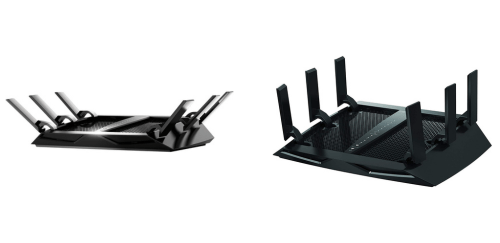
Why Do I Recommend The NETGEAR X6?
- The NETGEAR X6S features a 1.4 GHz dual-core processor for handling heavy network traffic, multiple 4K streams, and large file transfers with lower latency under load, while the NETGEAR X6 uses a 1.0 GHz dual-core processor.
- NETGEAR X6S comes with 512 MB RAM for maintaining stable performance with a higher number of simultaneously connected devices, whereas the NETGEAR X6 comes with 256 MB RAM.
- It supports MU-MIMO technology to communicate with multiple compatible devices at the same time without sequential data queuing, while the NETGEAR X6 uses SU-MIMO technology.
- The NETGEAR X6S includes 802.3ad link aggregation on two Gigabit LAN ports for combining bandwidth up to 2 Gbps to a compatible NAS or managed switch, whereas the NETGEAR X6 does not support link aggregation.
- NETGEAR X6S comes with integrated Plex Media Server support for streaming stored media directly from a USB drive to smart TVs and mobile devices without an external server, while the NETGEAR X6 does not include Plex integration.
- It features Broadcom BCM4709C0 silicon for improved packet processing efficiency and enhanced NAT throughput, while the NETGEAR X6 uses Broadcom BCM4709A0 silicon.
- The NETGEAR X6S supports concurrent multi-device data streams through MU-MIMO for reducing bandwidth bottlenecks in households with several active wireless clients, while the NETGEAR X6 supports single-user MIMO transmission.
- NETGEAR X6S includes enhanced firmware features aligned with the X6S platform for advanced traffic management and aggregation configuration, whereas the NETGEAR X6 firmware does not include link aggregation configuration support.
Maybe the NETGEAR X6S can make you comfortable because it’s a little bit cheaper than the NETGEAR X6. But you have to compromise all the above-mentioned features. Now the Decision is Yours. I hope it was helpful to choose the right one.
Side-by-Side Comparison
| Feature | NETGEAR X6 | NETGEAR X6S |
| WiFi class | AC3200 | AC3000 |
| Combined WiFi speed (marketing) | 3.2 Gbps | 3.0 Gbps |
| Band 1 max PHY rate (2.4 GHz) | 600 Mbps | 450 Mbps |
| Band 1 modulation note | 256-QAM listed with 600 Mbps | 450 Mbps listed |
| USB ports (total) | 2 | 1 |
| USB 2.0 ports | 1 | Not listed |
| ReadySHARE USB access (USB port count) | 2 USB ports referenced | 1 USB port referenced |
| Tri-band “Band 1” graphic speed | 600 Mbps | 450 Mbps |
| AC class label vs band sum | AC3200 | AC3000 |
| USB storage sharing phrasing | “Two USB ports” | “One USB 3.0 port” |
| Price | Check NETGEAR X6 Price | Check NETGEAR X6S Price |
What Common Both Can Do?
- WiFi Standard: Both routers use the 802.11ac (WiFi 5) standard, enabling high-speed wireless connectivity across modern devices. This ensures compatibility with laptops, smartphones, smart TVs, and gaming consoles that support AC-class networking.
- Tri-Band Architecture: Each router operates on one 2.4GHz band and two separate 5GHz bands. This setup helps distribute wireless traffic across multiple bands to reduce congestion in busy home networks.
- 2.4GHz Max Speed: Both models support up to 600 Mbps on the 2.4GHz band. This band provides broader coverage for devices located farther from the router.
- 5GHz Band 1 Max Speed: Each router supports up to 1300 Mbps on the first 5GHz band. This allows high-speed data transfer for streaming and gaming devices.
- 5GHz Band 2 Max Speed: Both include a second 5GHz radio with up to 1300 Mbps throughput. This enables better load balancing for multiple high-bandwidth users.
- Gigabit WAN Port: Both routers feature a single Gigabit Ethernet WAN port for connecting to broadband modems. This supports internet plans up to 1 Gbps.
- Gigabit LAN Ports: Each device includes four Gigabit Ethernet LAN ports for wired connections. This ensures stable, low-latency performance for desktop PCs, gaming consoles, and NAS systems.
- USB 3.0 Port: Both routers include one USB 3.0 port for high-speed external storage connections. This allows faster file sharing across the network compared to USB 2.0.
- USB 2.0 Port: Each model also provides one USB 2.0 port for printers or additional storage devices. This expands peripheral connectivity options.
- External Antennas: Both units feature six external antennas. Multiple antennas help improve signal distribution and spatial stream performance.
- Beamforming+: Each router supports Beamforming+ technology. This focuses wireless signals toward connected devices for stronger and more stable connections.
- Smart Connect: Both routers include Smart Connect band steering. This automatically assigns devices to the most suitable frequency band.
- Dynamic QoS: Each model includes Dynamic Quality of Service management. This prioritizes bandwidth for activities like streaming, gaming, and video calls.
- ReadySHARE USB Storage: Both routers support ReadySHARE for USB storage access. This enables centralized file sharing within the network.
- ReadySHARE Printer: Each device allows USB printers to be shared over the network. This eliminates the need for a dedicated print server.
- Guest WiFi Networks: Both routers support separate guest networks. This allows visitors to access the internet without accessing the main network.
- IPv6 Support: Each router supports IPv6 protocol compatibility. This ensures readiness for modern internet addressing standards.
- WPA/WPA2 Security: Both models support WPA/WPA2 wireless encryption. This protects network traffic from unauthorized access.
- VPN Support (OpenVPN): Each router includes OpenVPN support for secure remote access. This allows encrypted connections to the home network from outside locations.
- Parental Controls: Both routers include built-in parental control features. This helps manage device usage and restrict access to selected content.
Common Features
| Feature | NETGEAR X6 | NETGEAR X6S |
| WiFi Standard | 802.11ac | 802.11ac |
| Tri-Band Architecture | Yes | Yes |
| 2.4GHz Max Speed | 600 Mbps | 600 Mbps |
| 5GHz Band 1 Max Speed | 1300 Mbps | 1300 Mbps |
| 5GHz Band 2 Max Speed | 1300 Mbps | 1300 Mbps |
| Gigabit WAN Port | 1× Gigabit Ethernet | 1× Gigabit Ethernet |
| Gigabit LAN Ports | 4× Gigabit Ethernet | 4× Gigabit Ethernet |
| USB 3.0 Port | 1× USB 3.0 | 1× USB 3.0 |
| USB 2.0 Port | 1× USB 2.0 | 1× USB 2.0 |
| External Antennas | 6 | 6 |
| Beamforming+ | Yes | Yes |
| Smart Connect | Yes | Yes |
| Dynamic QoS | Yes | Yes |
| ReadySHARE USB Storage | Yes | Yes |
| ReadySHARE Printer | Yes | Yes |
| Guest WiFi Networks | Yes | Yes |
| IPv6 Support | Yes | Yes |
| WPA/WPA2 Security | Yes | Yes |
| VPN Support (OpenVPN) | Yes | Yes |
| Parental Controls | Yes | Yes |
| Price | Check NETGEAR X6 Price | Check NETGEAR X6S Price |
FAQ
Do both NETGEAR X6 and NETGEAR X6S support tri-band WiFi? Does NETGEAR X6S support MU-MIMO while NETGEAR X6 does not? How many Ethernet ports are available on both routers? Is link aggregation available on both models? Do both routers support USB connectivity? What WiFi standard do NETGEAR X6 and X6S use? Do both routers support Beamforming technology? Is Smart Connect available on both routers? Do NETGEAR X6 and X6S support Dynamic QoS? What type of security protocols are supported? Can both routers create guest networks? Is VPN functionality available on both models? How many antennas do NETGEAR X6 and X6S have? Do both routers support IPv6? |