Netgear R7000 & Netgear R6900P share many similarities, but there are also important differences, such as quality, performance, features, design, and connectivity. If you want the best one between them, I Would recommend the Netgear R7000 rather than the Netgear R6900P.
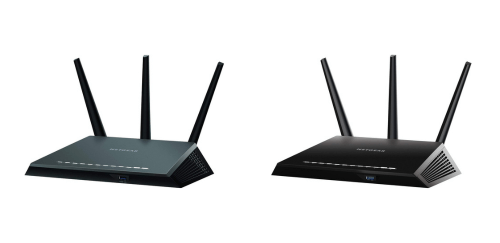
Why Do I Recommend The Netgear R7000?
- The Netgear R7000 includes one USB 2.0 port for connecting an additional printer or external storage device simultaneously with the USB 3.0 drive for shared access across the network, while the Netgear R6900P includes 0 USB 2.0 ports.
- Netgear R7000 supports Airtime Fairness to distribute wireless airtime more evenly among connected devices for maintaining stable throughput when slower 802.11n clients are active, whereas the Netgear R6900P does not list Airtime Fairness support.
- It includes a dedicated rear USB 2.0 port for connecting a network printer permanently without occupying the front USB 3.0 port used for high-speed storage sharing, while the Netgear R6900P uses only a single USB 3.0 port.
- The Netgear R7000 supports legacy ReadySHARE Printer functionality through its additional USB 2.0 interface for centralized wired printer access across multiple PCs, while the Netgear R6900P includes only one USB interface.
- Netgear R7000 features independent front USB 3.0 and rear USB 2.0 port placement for separating high-speed storage and low-speed peripherals to reduce cable congestion at the front panel, whereas the Netgear R6900P places only one USB 3.0 port on the unit.
- It includes explicit support for simultaneous USB storage and USB printer sharing for managing both backup drives and shared printing within the same network setup, while the Netgear R6900P includes a single USB port limiting concurrent peripheral connections.
- The Netgear R7000 features approximately 1.03 lb weight for easier wall mounting or shelf placement with reduced load on mounting brackets, compared to the Netgear R6900P’s approximately 1.13 lb weight.
Maybe the Netgear R6900P can make you comfortable because it’s a little bit cheaper than the Netgear R7000. But you have to compromise all the above-mentioned features. Now the Decision is Yours. I hope it was helpful to choose the right one.
Side-by-Side Comparison
| Feature | Netgear R7000 | Netgear R6900P |
| USB Ports (Total) | 2 | 1 |
| USB 3.0 Ports | 1 | 1 |
| USB 2.0 Ports | 1 | 0 |
| MU-MIMO | No | Yes |
| Airtime Fairness | Yes | No |
| DLNA | No | Yes |
| Antenna Count | 3 External | 4 Internal |
| Dimensions (L × W × H) | 285 mm × 190 mm × 50 mm | 230 mm × 186 mm × 67 mm |
| Weight | 453 g | 422 g |
| Power Adapter Output | 12 V ⎓ 2.5 A | 12 V ⎓ 2.5 A |
| WPS Button | Yes | Yes |
| QoS | Yes | Yes |
| Price | Check Netgear R7000 Price | Check Netgear R6900P Price |
What Common Both Can Do?
- Wi-Fi Standard: Both routers support IEEE 802.11 a/b/g/n/ac, allowing compatibility with modern and legacy wireless devices. This ensures seamless connectivity for smartphones, laptops, smart TVs, and IoT devices.
- Wi-Fi Class: Each model is rated as AC1900, meaning they share the same combined theoretical throughput. This makes them suitable for streaming, gaming, and multi-device households.
- 2.4 GHz Max Speed: Both routers provide up to 600 Mbps on the 2.4 GHz band. This band is ideal for longer-range connections and older wireless devices.
- 5 GHz Max Speed: Each delivers up to 1,300 Mbps on the 5 GHz band. This higher-frequency band supports faster data transfers and reduced interference.
- Dual-Band Support: Both operate on 2.4 GHz and 5 GHz simultaneously. This allows devices to connect to the most appropriate band based on speed or range needs.
- Gigabit LAN Ports: Each router includes four Gigabit Ethernet LAN ports. This enables stable wired connections for desktops, gaming consoles, and network storage devices.
- Gigabit WAN Port: Both feature a dedicated Gigabit WAN port for high-speed internet input. This ensures compatibility with fiber and high-bandwidth broadband plans.
- USB 3.0 Port: Both include one USB 3.0 port for connecting storage devices or printers. This allows network-wide file sharing and media streaming.
- External Antennas: Each router uses three external antennas. These antennas help improve signal coverage and wireless stability across larger areas.
- Beamforming+: Both support Beamforming+ technology. This focuses Wi-Fi signals toward connected devices to enhance signal strength and reliability.
- Dual-Core Processor: Each router uses a dual-core processor. This supports multitasking, stable throughput, and consistent performance under heavy network load.
- RAM: Both models include 256 MB of RAM. This provides sufficient memory for handling multiple simultaneous connections and advanced features.
- Flash Memory: Each router contains 128 MB of flash storage. This stores firmware and configuration data for stable operation.
- Guest Wi-Fi Networks: Both allow the creation of separate guest networks. This helps keep primary network data isolated while giving visitors internet access.
- IPv6 Support: Each router supports IPv6 addressing. This ensures compatibility with modern internet infrastructure and future network expansion.
- WPA/WPA2 Security: Both include WPA and WPA2 encryption protocols. This protects wireless traffic from unauthorized access.
- VPN Support (OpenVPN): Each router supports VPN functionality through OpenVPN. This allows secure remote access to the home network.
- Parental Controls: Both provide parental control features. This enables filtering of content and management of internet access schedules.
- QoS Support: Each model includes Dynamic QoS. This prioritizes bandwidth for gaming, streaming, or video conferencing when needed.
- WPS Push Button: Both include a WPS button for simplified device pairing. This allows quick secure connections without manual password entry.
- ReadySHARE USB Storage: Each router supports ReadySHARE functionality. This enables shared network storage through connected USB drives.
- LED Indicators: Both routers feature front LED indicators. These display network status, activity, and connectivity information.
- Power Adapter: Each model operates using a 12 V DC power adapter. This ensures stable electrical input and consistent device operation.
Common Features
| Feature | Netgear R7000 | Netgear R6900P |
| Wi-Fi Standard | 802.11 a/b/g/n/ac | 802.11 a/b/g/n/ac |
| Wi-Fi Class | AC1900 | AC1900 |
| 2.4 GHz Max Speed | 600 Mbps | 600 Mbps |
| 5 GHz Max Speed | 1,300 Mbps | 1,300 Mbps |
| Dual-Band Support | Yes | Yes |
| Gigabit LAN Ports | 4 × 10/100/1000 Mbps | 4 × 10/100/1000 Mbps |
| Gigabit WAN Port | 1 × 10/100/1000 Mbps | 1 × 10/100/1000 Mbps |
| USB 3.0 Port | 1 × USB 3.0 | 1 × USB 3.0 |
| External Antennas | 3 | 3 |
| Beamforming+ | Yes | Yes |
| Dual-Core Processor | Yes | Yes |
| RAM | 256 MB | 256 MB |
| Flash Memory | 128 MB | 128 MB |
| Guest Wi-Fi Networks | Yes | Yes |
| IPv6 Support | Yes | Yes |
| WPA/WPA2 Security | Yes | Yes |
| VPN Support (OpenVPN) | Yes | Yes |
| Parental Controls | Yes | Yes |
| QoS Support | Dynamic QoS | Dynamic QoS |
| WPS Push Button | Yes | Yes |
| ReadySHARE USB Storage | Yes | Yes |
| LED Indicators | Yes | Yes |
| Price | Check Netgear R7000 Price | Check Netgear R6900P Price |
FAQ
What is the maximum Wi-Fi speed supported by Netgear R7000 and Netgear R6900P? Do Netgear R7000 and Netgear R6900P support dual-band connectivity? How many wired Ethernet ports are available on each router? Do both routers support MU-MIMO technology? What type of processor is used in these routers? How much RAM and flash memory do the routers have? Do Netgear R7000 and Netgear R6900P support Beamforming? Are USB ports available for external storage? Can these routers create guest Wi-Fi networks? Do they support IPv6 connectivity? What security protocols are supported? Is VPN functionality available on these routers? Do Netgear R7000 and Netgear R6900P support parental controls? What power input do these routers require? Are these routers suitable for gaming and 4K streaming? |